
The mixed blessing of sobriety (and why I woke up the other day at 3 a.m. crying…)

A few days ago I shot this out to twitter…

I favorite my own posts to keep track of them. Don’t hate.

I have not written about recovery for a while so I decided instead of leaving this as a vague truism out on the internet, I would vulnerable and put some flesh onto this saying.

This was posted in response to the fact that I had woken up that morning crying at 3 a.m. This was not a time where I woke up, and then started crying. I was crying in my sleep and it actually woke me up.  This has happened a few times.

Now overall the last couple weeks have been good.  My antidepressants have kicked in, life has calmed down a bit, and things with my family are much better. However, these last couple of weeks have also been punctuated by an erratic staccato rhythm of intense sadness, such as this 3 a.m. one, that have at times been perplexing to me.

To deal with this I have been using one of the tools I have picked up in my recovery journey:  “Check-in’s.” Check-in’s meaning checking in with yourself.  You ask yourself what you are feeling and experiencing, emotionally, physically and spiritually.

This is important because addicts are rather notoriously out of touch with their emotions and I fit this stereotype perfectly. I have spent most of my life running from my emotions and feelings, seeking to numb them out and escape them whenever and however possible, no matter how self-destructive.  This has resulted in a situation where I often cannot articulate what I am feeling, if I am even aware of what I am feeling at all. Having “bad feelings” and “good feelings” is for the most part how nuanced my emotional world has been. Technically this problem is called alexythmia but I prefer David Brainerd’s estimation of Native American addicts when he referred to them as, “strangers to their own heart.”

Check-in’s help people like me, people who are strangers to their own hearts, become grounded in what the heck is actually going on with us instead of reflexively and instinctively turning to our addiction to escape the “bad feelings.”

I have learned that paying attention to my emotional state is an important part of recovery and relapse prevention, so I could not simply ignore waking up crying at 3 a.m. as if nothing happened. Later in the day I did a check in and the result was rather revealing.

The reason I was crying at 3 a.m. had a lot to do with loneliness.

Like just about every human being on the planet I would like to be in a relationship.  I do not mean a friendship or a family relationship, but a relationship relationship.  I am not talking about going on dates with someone for fun or even finding someone who is willing to have sex with you.  That is easy and that’s not what I am talking about. What I am talking about is wanting to be with someone that you truly love and who truly loves you in return.  I want to have someone in my life I could be fully committed to, have a family with, and grow old with.

Growing up, the average expectation in my community was to be married sometime in one’s twenties.  Many of my friends did get married during this time, and many of my peers have even started their families.

This has quite simply not happened for me.  I never thought I would be here but right now the phrase, “Always the groomsman never the groom” would apply to how I feel. It is perhaps more cliché for women to complain about this but I think men get lonely too. At least I do.

My loneliness is palpable and because I refuse to mask this feeling with the emotional Tylenol of my addiction I have to sit with it now like an unwelcome visitor in my heart. Sometimes I feel it more, especially when I see happy couples, sometimes I feel it less, but it is always there.

The simple healthy solution would be for me to deal with my own stuff, put myself out there and find someone to be with.  I have advocated for this simple approach and I believe it is good wisdom for just about anyone who is feeling this way.

However, there are two problems with this that have left me feeling stuck in this place. First, I know that I will be leaving the area within a year, so starting a relationship now seems like a futile endeavor. This means at least another year, probably more, of feeling the ache of loneliness.

Second, and much more importantly, as I pondered what was going on with me in my check-in I realized I am deathly afraid of getting hurt like I was in my last relationship. I have written about that relationship extensively elsewhere, but the short version is I was convinced I had found the person I was going to marry, I truly loved her, and it did not work out.

What I am realizing now is that no matter how much I have thought about it, no matter how much I have made peace with what happened, no matter how much I realize we were never going to get married, no matter how much I have worked towards a place of forgiveness with my Ex, what happened happened and what happened broke my heart in ways that I still do not understand. While I have not played out, “What if…” scenarios in a long time, I still think about what happened even though it has been almost three years.

Now that experience taught me that I could survive my worst fear and even if it happened again I would make it through. However, that experience also made me aware of just how bad it can hurt to love someone and have them fall out of love with you. I can handle rejection but having this happen again is what I truly fear. It also forever shattered the illusion that dating, romance and marriage would “just happen for me,” that success in these arenas are promised by God, are guaranteed in any way shape or form, or are easy or safe.

The desire for a relationship and the fear of being hurt have left my heart and my actions divided.  It is also partly the reason why the nine women that I have pursued since my Ex have never materialized into anything substantial. In a couple situations when I got close to a real relationship, which I want, I ran to feel safe, which is what I also want. Currently some days the fear of being hurt again is stronger and I tell myself I should just give up and make peace with feeling this ache of loneliness for the rest of my life.  Other days the fear of being alone forever and my desire for a healthy loving relationship are stronger and I manage to put myself out there a bit, even checking the dating profiles I have online.

So this is a pretty accurate picture of what’s going on with me right now and why I woke up at 3 a.m. crying…

Self-portrait

This whole situation is both the blessing and curse of sobriety. This is what makes sobriety hard, especially early on. On the one hand because I am not engaging with my addiction I can actually enjoy the good times and I am not self-destructing and making my problems worse by temporarily masking them. On the other hand because I am not engaging with my addiction I have to deal with all of life, even the shitty parts.

Now maybe in two weeks I will not feel like this.  Maybe I will feel like this for the next ten years.  Maybe I’ll get into a healthy relationship or maybe I will make peace with being alone.  While I do not know the future, after checking in with my own heart, I know where I am at now and I am learning to accept messy places like this as a valid part of life. I am learning not to run from places like this and even, in my own way, to accept this as part of my story that is uniquely mine and no one else’s.

And all that, for me at least, is something.

Posted in Personal Commentary, Recovery Journal | Tagged , , , , , , , , , | 6 Comments

Sincerity of faith is not an inoculation against participating in evil.

Yeah I’m sure this is exactly how things played out…

[Disclaimer: This post explores injustices and this post contains graphic and explicit pictures of violence and dead bodies related to that subject.]

No one can really deny that Christians have supported and participated in very serious evils in history. At least some of these evils are now commonly condemned and seen as plainly non-Christian and against the teachings of Jesus. However, at the time, Christians went along with them, seeing nothing wrong.

Anytime I have brought this fact up, Christians are quick to justify, explain away, deny or minimize the damage done by Christians. In the past, I have done so myself.

These deflections are fairly shallow attempts to evade responsibility for the past behavior of Christians. Perhaps more importantly, this defense of past Christians helps avoid what owning these mistakes would call for: present introspection into the Christian community, that might reveal similar injustices in contemporary Christianity.

One of the primary tools I have seen used over and over again when confronted with the reality of evil actions taken by Christians is to call into question the faith of those Christians most directly responsible. It is suggested that, “They were not ‘real’ Christians. ‘Real’ Christians (like me/my church/my tradition) would never do that!”

Not only is this a logical fallacy but it is completely wrong.

While spinning history this way may allow Christians to perpetually believe that we are the good guys/girls of history, it is dishonest and deceitful. It, like the picture of Columbus above, is a make believe picture of our past that paints a false picture of a much more complex and much darker reality. I say this because if we read the journals and writings of Christians throughout history, including the ones we know participated in injustices and evils, you will find sincere faith and orthodox theology and practice in many of them.

For example…
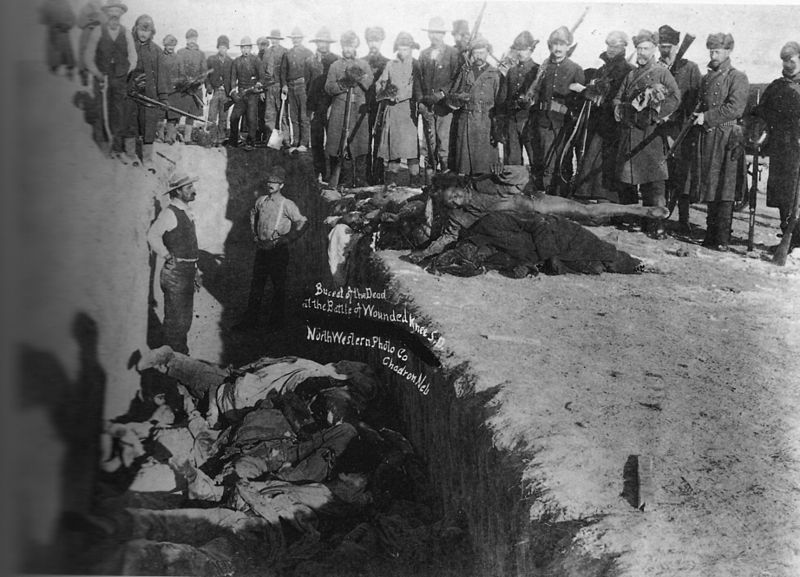
This is a more accurate picture of the legacy of Christopher Columbus. This is the mass grave at Wounded Knee.

For example, let us begin by considering Christopher Columbus and colonialism.  Washington Irving wrote of Christopher Columbus, saying:

“He was devoutly pious: religion mingled with the whole course of his thoughts and actions, and shone forth in his most private and unstudied writings. Whenever he made any great discovery, he celebrated it by solemn thanks to God. The voice of prayer and melody of praise rose from his ships when they first beheld the New World, and his first action on landing was to prostrate himself upon the earth and return thanksgivings. Every evening the Salve Regina and other vesper hymns were chanted by his crew, and masses were performed in the beautiful groves bordering the wild shores of this heathen land. All his great enterprises were undertaken in the name of the Holy Trinity, and he partook of the communion previous to embarkation. He was a firm believer in the efficacy of vows and penances and pilgrimages, and resorted to them in times of difficulty and danger. The religion thus deeply seated in his soul diffused a sober dignity and benign composure over his whole demeanor. His language was pure and guarded, and free from all imprecations, oaths and other irreverent expressions.”

Columbus by this and other accounts was sincere in his faith, even to the point of not cussing. He was also completely for the exploitation of the new land and the enslavement of its people.

“After returning to Spain and reporting on the incredible wealth in the islands of the ‘New World,’ the monarchs gave Columbus 17 ships and more than 1,200 men to plunder the Caribbean. His new expedition went from island to island gathering slaves and gold with unprecedented brutality.


Opening the continent to slavery Columbus was the first European slave trader in the Americas. He sent more slaves across the Atlantic Ocean than any individual of his time-about 5,000. He and his men captured and enslaved the Arawak people almost as soon as they landed. Some were sent to Spain and others served Columbus on the islands. In 1496, Columbus jubilantly wrote Spain’s King Ferdinand and Queen Isabella about the possibilities for exploitation in the West Indies: ‘In the name of the Holy Trinity, we can send from here all the slaves and brazil wood which could be sold.’

In Hispaniola, Columbus and the Spanish set up a system that made every Indian over the age of 14 responsible for gathering a certain amount of gold each month. They received copper tokens to hang around their necks if they succeeded. If an Indian was caught without a token, the Spanish cut off their hands and let them bleed to death.” (Source: Banderas News – italics and bolds mine)

This devout Christian was completely fine with participating in these evils. To make it worse, Columbus did not participate in these evils despite his sincere faith, Columbus was rapacious in his desire to exploit the New World because of his faith.

Writing home to his monarchs Columbus claimed that the Gold he sent back from the New World, which he was claiming was Tharsis and Ophir, would fund 100,000 foot soldiers and 10,000 cavalry for the retaking of Jerusalem. Columbus envisioned the exploitation of the New World would fund the retaking of Jerusalem from the Muslims, which he saw as a Christian duty. (Source: Columbus and the Quest for Jerusalem, by Carol Delaney)

Columbus was not simply an imperfect and sinful but otherwise sincere Christian; Columbus was a sincere Christian, fully shaped by the faith and cultures of his day, and that is why he committed heinous evils believing himself to be righteous.

Due to the colonization that followed Columbus’ “discovery” of America the Native American population which had been estimated to number anywhere from 90-112 million pre-contact was decimated to around 250,000 individuals at its lowest point.

Entire tribes, languages and cultures no longer exist.

For example…
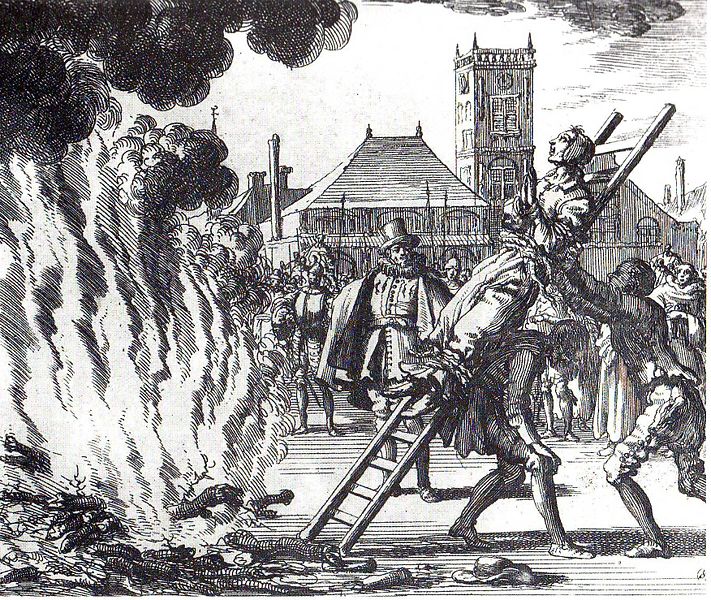
The burning of one Christian, the Anabaptist Anneken Hendriks, by other Christians, Spanish Catholics.

During the Reformation, a time of idealized by many Protestant sects, Luther, Calvin and many other Reformers were clearly very sincere in their faith as were many of their Roman Catholic counterparts. Much of the current theology in Christianity is derived from these men or has developed in response to their thought.  Many Christian sects have their origin from this time or owe their origin indirectly to its legacy. Some, such as Lutherans or those who declare themselves to be Calvinists or Arminian, even label themselves after leading theologians from the time.

Many of the leaders of the Reformation also participated in and encouraged anti-Semitism. Some continued to approve of Christians serving in wars (even as mercenaries).  Some persecuted and killed other Christians for believing the wrong things about God. Many of these attitudes and beliefs met with widespread acceptance not criticism.

For example…
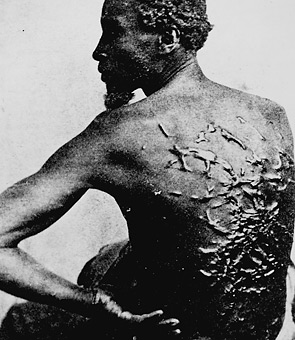
Some of the greatest Christian leaders of the day participated in and advocated for slavery.

Skipping forward a few hundred years in history, during the Great Awakening in the Americas the Holy Spirit was being poured out and incredible changes were happening in the U.S. Meanwhile slavery was a reality that was supported or passively accepted by sincere and influential Christians. George Whitefield, the famous American evangelist and orator, advocated for slavery. Jonathan Edwards, who I myself admire in many ways for his faith and thought, owned slaves. The Methodist circuit riders, who died at the average age of twenty-eight because their zeal for evangelism drove them to brave the elements of the American frontier, owned on average eight African slaves a piece. This was a systemic evil that was justified by Christian theology that sincere Christians participated in. This was not a small imperfection in otherwise sincere believers and these were not insincere believers.

For example…
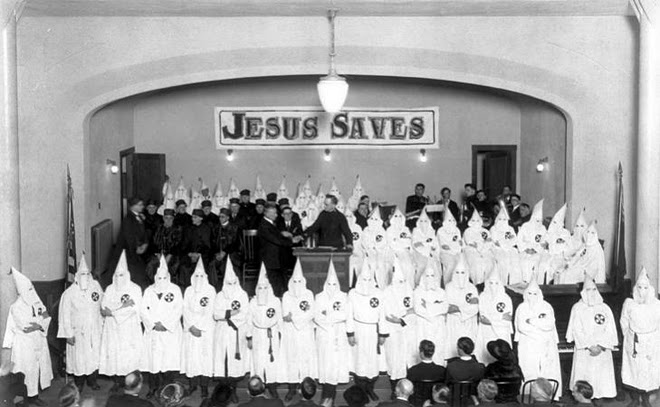
Christianity and racism are not mutually exclusive.

This photograph is from the early 1920’s near Portland, Oregon. While obviously I would not judge all Christians by the KKK’s stance, it cannot be denied that the KKK were started as an anti-black and anti-Catholic Protestant organization. Their stress was on 100% “Americanism” which to them meant being Protestant and White.

For example,
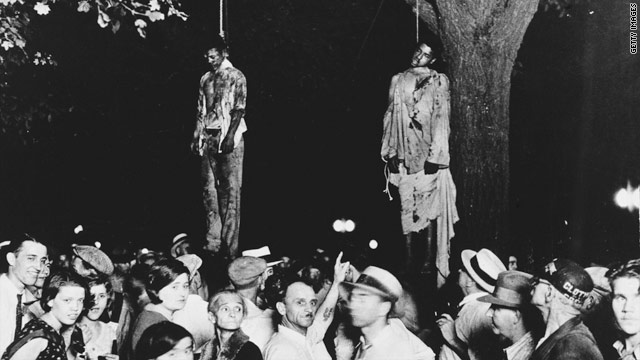
(Most likely) killed by Christians.

This is a photo taken in Marion Indiana in 1930 at the lynching of two black men.  Marion Indiana is currently 75% white and home to the largest Christian university in the Midwest. While I cannot know for sure, statistically speaking most of the people in this photograph, including the man smiling in the lower left, were probably Christians. Again, statistically speaking most of the lynchings that took place in the South were perpetrated by people who went to church the next Sunday.

For example,
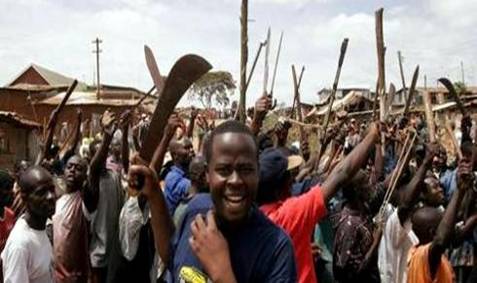
 

Most of these people would self-identify as Catholic or Protestant.

Moving forward in time again, Rwanda was touted as a model for missionary success and most Rwandans would self-identity as a Catholic or Protestant. However, Belgian Christian colonists exacerbated existing divisions among Rwandans to make Rwanada easier to rule and exploit. The artificial distinction between Hutu and Tutsi created by these Beglian Christians directly led to the massacre in 1994.

Christians also actively participated in the Rwandan genocide.

“Church personnel and institutions were actively involved in the program of resistance to popular pressures for political reform that culminated in the 1994 genocide, and numerous priests, pastors, nuns, brothers, catechists, and Catholic and Protestant lay leaders supported, participated in, or helped to organize the killings.” (Source: Timothy Longman)

To make this statement a little bit more real, here is a quotation from an Adventist Christian and choir member who participated in the Rwandan genocide.

“EMMANUEL: Alice is the last person I cut. I cut off her hand and made a scar on her face. I thought I killed her. And then I stopped killing. Something had begun to bother me. I was a singer in an Adventist church…I saw the faces of all of the people I killed before me. I remembered I had sung in front of them in church. I thought, ‘How come I killed the same people I was singing for?’ It was time to stop. Still, I had already taken their things, and I decided those things would stay in my house.”

While it is admirable that his faith was part of the reason he stopped, his Christian faith was sincere enough to get him to be an active participant in his church but apparently not enough to stop him from participating in genocide.

For example,

Yup, he’s a Christian.

A number of the participants of abuses at the Abu Ghraib prison were Christians. Upon being confronted by Joseph F. Darby, Charles A. Graner responded,

“The Christian in me says it’s wrong, but the corrections officer in me says, ‘I love to make a grown man piss himself.” (Source: The Washington Post)

For example,
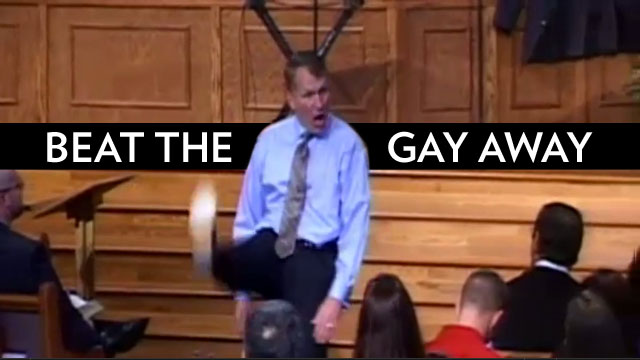
Yup, he’s a Christian. (By the way, obviously minus the text, this is a screen grab from his actual sermon.)

Sean Harris, the pastor and spiritual leader of Berean Baptist Church in Fayetteville advocated that parents beat the homosexuality out of their children if their boys are too effeminate or their girls are too butch. (Source: Jezebel) Around the same time Charles L. Worley, the pastor and spiritual leader of Providence Road Baptist Church in Maiden, N.C. advocated for rounding up homosexuals and surrounding them with an electric fence so that they will die off.(Source: Yahoo) Both of these pastors sermons were met with applause and “amen’s” from their congregation.

Etc., etc., etc.

But what does this mean for Christians today and why do I bring this up?:

No one, no matter how sincere or sentimental in their faith, is categorically prevented from participating in or supporting injustice, evil and oppression that are directly opposed to the Way of Jesus Christ.

Sincerity of faith is not an inoculation against participating in evil. Just because we are devout or sincere in our affection towards Jesus and our commitment to pursue righteousness does not guarantee that all of our practices and beliefs, even commonly and widely accepted ones, are in fact righteous and just.

Because of this reality, Christians need to seriously consider that if followers of Jesus got it way wrong in the past, that we might have it way wrong today. In light of all this we need to be less concerned with perpetually justifying ourselves and more concerned with prayerfully, scripturally and carefully examining the current beliefs and practices of Christian culture that we participate in, no matter how time honored or common sense they are to us.  We need to stop protecting and enshrining evils and injustices that are part of the current status quo in Christian culture all the while pretending or truly believing we are defending God or the Christian way of life and faith. We need to do this because history has shown that just saying, feeling or professing to  really love or believe in Jesus is not enough to ensure you are actually following and obeying the Way of Jesus.


Posted in Christianity, Personal Commentary | Tagged , , , , , , , , , , , , , , | Leave a comment

Colonization and Despair

In a recent class I was forced to argue how Western colonization in Asia was a good thing. Anyone who knows me knows that this is pretty much the exact opposite of my beliefs but I accepted the challenge (and the assignment) and did my best.

In the end I was able to highlight some of the “good” in colonialism that the author of a book pointed out.  It also made me question if my critique of colonialism was simply me being swept up in the post-colonial conversations that are raging in academia and theology.  Am I just part of a fad which is the intellectual equivalent of tight jeans?

Maybe I am and maybe I am not.  Maybe there actually have been some good things that have happened as a result of colonialism that I often fail to acknowledge. However, colonialism leaves a lot of evil in its wake so I am hard-pressed to think of it as a good thing all things considered.

One of those things is despair.  The number one issue in Native American communities, especially among the youth, is a sense of hopelessness and despair.  There are small reservations that will see five teens commit suicide in one week. A recent article highlighted how this is not just a Native American phenomenon but something common to another indigenous cultures that has endured western colonization, the aboriginal culture of Australia.

Colonization led to genocide, forced assimilation, the internal displacement of people, germ warfare, slavery, economic exploitation, ecological destruction, and introduced all types of addiction and abuse into a variety of indigenous cultures.  The despair it leaves in its wake is understandable and perhaps the best indication that colonization as a whole was incredibly evil and problematic.

Posted in Personal Commentary | Tagged , , , | Leave a comment

Why I’m all for socialized healthcare…

Recently the supreme court ruling has upheld Obamacare and the controversial individual mandate as constitutional.  Many of the comments I have seen expose how readily many people (on all sides) are willing and eager to swallow extremist views and paint this decision as either the a) end of democracy as we descend into a police state or b) the arrival of a utopia.

Reactions to Obamacare aside, I thought it would be a good time to write about why I am totally for complete socialized healthcare…

When I was eight I was diagnosed with ankylosing spondylitis, a form of juvenile arthritis. I have been on pain medication ever since then. Currently I am on on Humira, an expensive but effective injection I take every two weeks.

When I was ten or so I began having bouts of uveitis, a related condition that involves inflammation in my eye. This inflammation normally responds to eye medication but the progress of this treatment has to be monitored by a doctor every couple of weeks.

When I was twenty two I had a bout of uveitis that for whatever reason did not respond well to medication and the result was that I ended up with glaucoma. After many failed attempts at treating this glaucoma, I eventually had to have a surgery at the age of twenty three that is usually done on senior citizens. It cost me a fair amount of my vision in my left eye and I was told I would certainly have to have additional surgeries later, most likely within five years, to treat the glaucoma or fix the cateracts that resulted from this treatment.

I am now twenty seven. I am about to lose my health insurance because I am about to graduate from my masters program. I am too old to be insured on my parents plan.  Full-time jobs are scarce and I will most likely have to work part-time jobs outside of my field to make ends meet. Because of the economy, even this is not guaranteed.

Very soon I will most likely be uninsured.  This means not being able to pay for my arthritis medicine and dealing with chronic pain.  This means not being able to pay for my eye medication if another bout of uveitis strikes. This means being handed a massive bill if the eye surgery I am about due for comes up. (The last one cost $16,000)  This also means  a gap in my coverage which for-profit health insurance companies love because this means they can deny me coverage. As if a lack of coverage somehow caused my conditions and I choose this lack of coverage on purpose out of irresponsibility or negligence.

The last time I was in a similar situation in 2009 I had to pay $400 a month for health insurance as a young male.  This is an absurd rate that was higher than my rent at the time, and it was justified because of my preexisting conditions. None of these conditions have been a “lifestyle” decision caused by smoking, drinking, a lack of exercise, diet or anything like that.

Unlike many in the U.S. I have actually been on socialized health insurance.  I lived in Canada for four years while I was in college and paid to participate in their health insurance. If I recall correctly this directly cost me $600-800 for the year to enroll as a student.

If I were facing the exact same challenges and health problems I do now, but was covered by a sensible socialized healthcare policy my situation would be very different. I would have a lot less anxiety about the future and would be far more willing to take risks, including financial ones. I would not be penalized for being sick through no fault of my own. I would be much more free to accept work and pursue what was more meaningful to me if I did not have to worry about if it provided health insurance. I might not have more money, because I would have to pay for my health insurance through taxes, but I would rather do this than get gouged through private medical insurance.

Now socialized healthcare is not a perfect system.  It has its faults. It is not free.  It can take longer to get seen because more people are using health services.  There is no silver bullet solution to all of our healthcare problems, and every system has pros and cons.  However, having experienced both I would suggest the current healthcare system in the U.S. is ridiculous and it would be much better for our country as a whole to go to socialized health-care.

P.S. In reality, the best situation is probably a hybrid system of allowing for socialized medicine and private health-care to co-exist. Such a system already exists in Australia. This would allow for the best (and worst) of both world.

Posted in Personal Commentary | Tagged , , , , , | Leave a comment

Sticking to the plan…

A few weeks ago I was battling another bout of depression where I had been contemplating suicide. I really saw no reason to come back this time and I see now part of me was hoping to find a way to live in that shadowy space with no hope so that I could spare myself the pain of disappointment.

However, essentially for the sake of two friends, I yet again made a decision to come back from that place.

For me this was a difficult decisions because I knew it meant at least two things.

First, it meant facing and working through a lot of present (and undoubtedly future) frustration, pain, failure, discouragement, disappointment, hopelessness, guilt and shame.

Second, it meant attempting to integrate all of my life experiences into a coherent framework that does not reek of false hopes and denial. While I do not expect such a framework to be perfect or never change, I do need something to provide some meaning and stability to my life.

This decision was made on a Saturday and as soon as Monday rolled around I was faced with a more basic and pressing question.

“Now what?”

However I wrestled with the challenges I faced and however I attempted to make sense of life, I knew that sitting in my room alone ruminating on everything would not be helpful.  I do not like wasting time so that day I set up a plan that I have been following since then.

Every morning I have been applying for any jobs I am reasonably qualified for.  I have been pursuing any leads I can find through contacts and have been setting up fall-backs in Hawaii and Washington should I fail to find work in the area that can pay my bills by September.

After that I head to the gym.  I essentially stop eating when I am depressed and I had lost a lot of weight, mostly in my upper body.  While I am not trying to be Mr. Universe, I also do not like looking and feeling like Skeletor, so I figured it was time to eat and get back to the gym. I also know that moderate exercise is good for people struggling with depression and at the very least it would get me out of the apartment and around other human beings for a while. So I took an hour, set up a workout routine, and have been going to the gym four days a week.

In the afternoons and evenings I have been writing. Sometimes I see no purpose in it. I fear writing and posting my thoughts changes nothing and only serves to open up my thoughts and belief to external critique. However, my self-imposed goal is one worthwhile post or article a week. At the very least this forces me to write, an activity in which I lose track of time and experience what currently passes for happiness.

I have also continued counseling.  While things are not good, they have been getting better. This is usually the time where I feel it is okay to stop seeking help because things are looking up.  I now better know.

I also started antidepressants. I did promise friends to get on them and I followed up with doctors about them.  I see now that I avoided them for so long not because of some moral stance but because I did not want to admit I am someone who struggles with depression. I absolutely hate this about myself. I am aware that I cannot handle frustration and disappointment like other people do.  I am aware that I sometimes I cannot be happy, even though I have many amazing things in my life. I am aware that when I go into a bout of depression I often am self-destructive and am my own worst enemy.  I do not expect the antidepressants to heal me or give meaning to my life, but I do hope they help.

I have joined Co-dependents Anonymous. I have realized co-dependency is a much bigger issue for me than anything else.  So I now attend weekly meetings to be around people who I can actually identify with. This is also the only place that I have been comfortable connecting with my Higher Power. I’ll probably drop by Pihop eventually and see how that goes, but anything else seems like an incredible stretch.

In short, this is essentially a plan of mental, spiritual and physical self-care. Sometimes I stick to it for no other reason than the fact that I made a decision to come back and this is the best I know how. At times, when tempted to slip back into apathy or despair, I literally tell myself “It’s a good plan. Stick to the plan” and go do my next scheduled activity.

While there has been no magical redemption of all the crap that I have had to deal with and continue to wade through, right now this is my life, and I’m showing up for it.

Posted in Personal Commentary | Tagged , , | 1 Comment

The Next Several Weeks: Scraps of Meaning

“Wise words from a decent man.” as Drake would say.

[Intro: Several weeks ago I completely disengaged from all community, stopped posting on my blog, and deactivated my Facebook and Twitter accounts. I did not attend my graduation from the PIHOP SSM and Fuller Theological Seminary. Unbeknownst to all but a handful of close friends I have spent 90% of my time alone in my room with the door shut as I have been in a deep depression. This happened as a result of a one-two punch that came from dealing with life on life’s terms.

This post is about where I am at now.]

Attempting to accept my inability to change my past and my character defects as well as to accept the fact that attending seminary has been proven to be a very costly mistake has been very difficult.

As if this were not enough a variety of other stressors and disappointments have come up for me to deal with.  Like a faint echo of the two reasons I came down to seminary, it looked like a job and a relationship were on the horizon for me. Against my better judgment I got my hopes up about these things just in time to be disappointed. I have continued to deal with my dysfunctional family, for whom something as simple as Mother’s day or a Commencement ceremony turns into a fiasco, a web of lies and masks and an exchange of bitter emails.  I am still struggling to find a job in a down economy for the last of my loans run out. Etc.

More importantly, for some time I have also been dealing with existential crisis. My faith and theology have been thoroughly deconstructed by my studies and my life experiences.  I have also studied enough history to see some larger patterns that make me question what the point is at all of attempting to reform the Christian church or starting my own. At the end of the day if I die before I see thirty or if I die at one hundred would that really matter in the grand scheme of things? The one thing I am certain of is that I have experienced a fair amount of pain and disappointment and all signs point to more pain and disappointment in my future. I used to think there was a light at the end of the tunnel but now I realize there is just the tunnel. I have seen too much death and not enough resurrection to think anything differently.

Predictably this whole situation triggered another bout of depression and I have been at a place of complete comprehensible demoralization. The worst part about these episodes is that sinking feeling I get when I know things were going downhill fast.  I tried to keep my spirits up, but I knew there was nothing I could do about it. Eventually I crossed that invisible threshold of frustration, disappointment and despair and it was like life suddenly became black and white instead of color. When I hit this place there is no simple solution and no way to come back from it any time soon.

My best attempts to deal with this whole situation led me to very predictable coping mechanisms and patterns.  I isolated thoroughly from community, I internalized all of my problems, and I returned to numbing behaviors in an attempt to escape my life. It is in these places that a place “where there is no love and there is no pain,” as Nine Inch Nails put it, has a certain appeal to me. I just want to be numb and I would give up the good if it just meant not feeling the bad.

The most discouraging thing about this was when I realized that in the last several weeks I have actually been in a place that is almost exactly like the dark place I was in 2008…and that was before I spent many years and a lot of effort seeking healing in recovery, counseling and prayer. It has made me question why I try so hard given the fact that I see little or no returns.

I eventually became suicidal, which represents the ultimate and final numbing out. I do not say that lightly or as some sort of cry for attention or help.  It is just true. It got to the point of making a very detailed and achievable suicide plan and I eventually made an emergency appointment with my counselor. We decided against hospitalization on the grounds that I pursue psychiatric care and told some of my close friends.  This was very difficult for me because I feared letting them know where I was really at would make me a burden that would promptly be rejected and abandoned.

There are essentially only two reasons why I have come back from that place.

First, I rashly made a promise to two friends to not do anything until I got on antidepressants.  I thought this process would take a week or two but instead it has dragged on and I am still not on them.  While this has made keeping this promise impractical, and I do not think antidepressants will solve all of my problems, as I said I am a man of principle and sometimes that is all I have and I will not break my promise.

Second, and much more importantly I realized that there are two people who actually need me.

My counselor recommended I check out Viktor Frankl’s Man’s Search For Meaning. In it Frankl describes two episodes in the concentration camps of Nazi Germany where he and other prisoners had to talk two men down from suicide.  They did this by reminding them of the unique responsibilities. They had to do everything they could to survive to be able to fulfill those responsibilities in the future.  For one of them it was the fact that he had daughter that could never find a replacement for her father’s love. For the other it was a set of geography text books that he started and only he could finish.

I wept as I realized I had no one and nothing like that in my life. While certainly I had some plans for the future and they might be good, they seemed too far in the future to be of any use. While some of my friends assured me they needed me and they would severely miss me and never get over my suicide, it did not seem real.  I could wink out of existence and most of my friends lives would continue pretty much unchanged.  They have other people who made them laugh and supported them through hard times.

However, two of my friends back home tearfully told me over the phone that I was one of the only people they really had and that they needed me.  They tried to explain this but I brushed it off as it sounded like everyone else.  Then they came down to visit me during commencement weekend.  As we talked about what was going on in my life and theirs I realized that what they had said was actually true.

While one of them comes from a Christian home, both of them come from broken and dysfunctional homes. Both families have produced major challenges rather than support in their relationship.  However, from before they were together and through their relationship, their wedding, and their first months of marriage I have been one of two people who has been categorically for them and helping them get through various challenges and drama that often originate from their family. I have been what their family should be to them and quite literally functioned as a brother. To them I am not irreplaceable and I could understand that in a very concrete way.  I realized if I did do the hard work of coming back from where I was at, if I did end up committing suicide or just becoming some cynical numbed shadow of my former self, then they really would have no one.  I did not want to do this to them.

These two scraps of meaning are the only two reasons I have decided to come back from where I was at. I have, yet again, made the difficult decision to live.

While the future is filled with uncertainty, I know my past can never be changed, and I will undoubtedly face more difficult times in the future. However, I hope exercise my “final freedom” as Frankl would call it and choose to become, as Dostoyevsky said, a man “worthy of my sufferings.”

P.S. Thank you to all the people who have been there for me, or wanted to be there for me.  I am grateful to all of you, even though I may not show all the time. A special thanks to my two friends from Modesto who visited me.  It was plainly obvious to everyone here how much you love each other. May you have many happy anniversaries and many children with ADHD.

Just because. 🙂

Posted in Personal Commentary | Tagged , , , , | Leave a comment

The Last Several Weeks (Part 2):Why I did not attend Commencement.

[Intro: Several weeks ago I completely disengaged from all community, stopped posting on my blog, and deactivated my Facebook and Twitter accounts. I did not attend my graduation from the PIHOP SSM and Fuller Theological Seminary. Unbeknownst to all but a handful of close friends I have spent 90% of my time alone in my room with the door shut as I have been in a deep depression. This happened as a result of a one-two punch that came from dealing with life on life’s terms.

This post is about the second punch.]

In January of 2010 I left my job, my family, and my recovery community to come to Fuller Theological Seminary for two basic reasons.  First, I came to earn an M Div degree with an emphasis in recovery ministry in preparation for full-time work in a Christian church. Second, I came to continue my relationship with my then girlfriend who I was thoroughly convinced I was going to marry. I essentially came to Fuller thinking my career and my family, two rather major decisions and facets of one’s adult life, were going to be settled by the time I left.

While I have had some good experiences and have grown as an individual, after two and a half years and $70,000 dollars, not only did I fail to achieve these two goals but things actually became worse in many ways.

In regards to the degree, seminary is a place where future Christian leaders receive specialized training in preparation for future jobs in ministry. However, seminary for me was quite the opposite. Seminary was the place where I realized most of what I was taught about life and faith by the Christian church has been wrong, where I gave up pursuing full-time ministry work, and where I stopped identifying as a Christian. This is like a medical doctor went through all of medical school only to realize that they do not want to practice modern medicine.

In regards to my Ex, after few months down here she left me with little explanation. While this this was painful for both of us at the time and has been a major source of pain, confusion and anguish in the last two years for me I see now she was right to leave me and I am ultimately glad she did. I had put incredible and impossible expectations on her because I thought she and what she represented (marriage and family) would fill the void the that cannot be filled. Several months ago she got engaged to her new boyfriend and while this was an odd emotional space for me to navigate I sincerely wish her and her fiancé all the best.

These are quite obviously the opposite outcomes of my main goals in coming to seminary and they unfolded rather early in my time down here. There are two basic reasons why I stayed and finished a degree.

First, I was scared.  My only option if I left school was to find a job to pay rent so I could stay in the area. Going home was simply not an option as I had just started to come out of denial about my family. However, the problem is I have always felt incompetent and ill-prepared to accept such adult responsibilities and it was easier for me to take the cowardly way out, stay in school, something I knew I could do well, and have the safety net of student loans. This has only postponed the inevitable and now I still have to face those fears, only this time with a large amount of debt.

Second, I foolishly hoped it would all work out somehow. I had prayed for months and sought counsel from my mentor and many pastors before choosing to come to Fuller and pursuing my Ex.  Both of those decisions were widely affirmed and even confirmed by God. When things went bad I tried scripting this scenario in a variety of ways in an effort to excuse God and excuse myself from this dismal failure. I held out hope that God had some secret redemptive plan all along and would step in at the last moment and it would make sense somehow. This has not happened in any way shape or form.

Commencement has been an arbitrary and invisible line in the sand. It has been a source of dread and finality to me, not a sense of accomplishment. It has felt like a shot-clock on the time when God would redeem my mistakes and reveal His secretive plan. It has felt like a count-down to unemployment, a lack of medical insurance and ultimately homelessness. It has forced me to ask the questions “Was it really a mistake to come down here?” and “Was it a mistake to stay?”

Considering the purpose of seminary, my goals coming down here and the present state of my life, even considering the good things that have happened since I have come to Fuller, the only answer I can produce that does not smack of denial is a firm “Yes” to both.

This has been bitter pill to swallow. This has been the other punch in the one-two combo. This is yet another major life decision that I have gotten wrong. This has been yet another failed attempt at solving the problem that cannot be solved.  This is another problem I have created for myself that I need to recover from. While I know no one is perfect, and I made the best decision possible when coming down here, my inability to leave when I knew the decision was wrong still seriously bothers me.  I also know that the older I get the stakes for these decisions just get higher as does the cost of recovering from them.

Some might say I am being too hard on myself. Some might suggest that the good things that have happened in the last two and half years make it all somehow worth it. Some might suggest in time the mysterious reason I was called to this season by God will be revealed. While there may be some truth in these statements I see such statements as well-intentioned attempts at providing false comfort and scripts to absolve myself and God of any responsibility. These options are unacceptable to me.

I am, for better or for worse, a very principled man. Sometimes my principles are all I have. Part of this means that I am willing to admit responsibility and willing to admit my mistakes. Failing to do so just perpetuates such mistakes and stunts my own growth. Excusing myself by scripting this failure in some different light simply will not do.

Last Saturday was the graduation ceremony for my Masters in Theology. Some people noticed I was not present and a few joked when they saw me later and said, “What kind of person misses their own commencement?”

I did not miss my commencement.  I chose not to go.

I considered attending commencement because it is the natural thing to do after finishing a degree program and I knew it was what my family expected and wanted of me. I even checked out regalia should I decide to go. However, the more I thought about it the more absurd attending graduation became.

Ultimately I chose not to go because it does not make any sense to me to celebrate my mistakes.

Posted in Personal Commentary | Tagged , , , , , | Leave a comment

The Last Several Weeks (Part 1): Don Quixote Hangs up His Spurs

“FML!” – Kevin

[Intro: Several weeks ago I completely disengaged from all community, stopped posting on my blog, and deactivated my Facebook and Twitter accounts. I did not attend my graduation from the PIHOP SSM and Fuller Theological Seminary. Unbeknownst to all but a handful of close friends I have spent 90% of my time alone in my room with the door shut as I have been in a deep depression.

In the next three posts I’ll try to explain why this happened as a result of a one-two punch that came from dealing with life on life’s terms and where I am at now.

This post is about the first punch.]

My entire life I have been a knight-errant on a valiant quest for…something. I have always felt a void that I could never explain or describe but knew I needed to fill with an equally mysterious something. Like a clueless Prince Valiant I set off and this blind but passionate pursuit has been the driving motivation behind my life.

This journey kicked into high gear in 2008 after I had an eye surgery to correct glaucoma. Right before I went under for surgery I was faced with the fact that I was raging pissed, I was completely miserable, and I was hiding it from everyone. I decided I needed to stop pretending everything was fine, I needed to get honest with myself and other people and I needed to make some changes in my life.

While I knew these changes would come at a price and that a new level of self-awareness might reveal some truth not to my liking, I believed that all things considered it would certainly be worth the cost. At the very least anything had to be better than where I was at.

As I continued on this journey I have given myself completely to a variety of people places and things, hoping that they were or would provide this something I needed to fill this void I did not understand. However, as I have gotten older, as I have tried more and more things, as they have all failed to be that something I’m looking for, I have realized this is an ongoing pattern in my life that is closely tied to my cycles of depression.

In the last couple weeks, in exploring this dynamic in a new counseling relationship, I have finally become able to name the void that I have been trying to fill.

What I have been on a quest for, what I have been intuitively and instinctively attempting pursuing, is the love of my family that I was denied as a child and to change in me what was broken as a result of not receiving that love.

My parents did the best they could and provided for my educational and material needs exceptionally well. However, when it came to providing for my emotional needs, I was often neglected or even abused. This deeply impacted me and the character defects that I hate the most about myself all appear to trace back to the problems in my family. In other words, I have been trying to have the experience of growing up in a loving and stable home and to fix what was broken because I grew up in a home that was not.

All of my efforts to receive this love ultimately channeled into two streams.  First, I hoped to be good enough in order force change in my family, so that I would experience a loving a and healthy family now and that would somehow makeup for my past. Second, I hoped to by get married and start my own family, so that I by creating this experience in my own family that would somehow makeup for my past.

Like Scott Bakula in Quantum Leap I have been trying to “Set things right that once went wrong,” only without any way to travel back in time or any holographic and omniscient guides like Al or Ziggy.

In the last couple weeks I have also been faced with the reality that I will never be able to fill that void.

I see now that the time to have received the love I missed as a child, the love that I have so desperately sought, has come and gone. None of the solutions I have pursued have worked because none of them can. The experience of growing up in a loving and stable home environment has been forever denied to me. Nothing can fix or change that and nothing ever will. The only way forward is to acknowledge the unchangeable nature of this loss, mourn it and move on.

In a similar vein, the character defects that I hate most in me are not going away. I have been searching for some categorical change, some permanent deliverance from these things, and have even been willing to work incredibly hard for it, but such a change is not going to come. The best I can hope for is incremental change over a very long period of time.

So the same week I was finally able to name what I have been searching for my entire life was the same week I was faced with the fact that I am never going to get it, no matter how hard I try, no matter what I do, no matter how unjust the situation feels or is.

This is not where I thought my pursuit of truth and healing was going to lead me. I thought my journey of self-discovery and in all of these healing paths would lead to change and fulfillment. I believed that all of my hard work in recovery and healing, all of my efforts to be a good man, all of my attempts to obey God would lead to a happy life and control over my past, my family and my character defects.

I was wrong.

I realize now that the journey before me, the journey that has always been before me, is to accept my past and mourn it, it is to accept who I am make peace with myself, and attempt to cobble together enough meaning to believe I have a life worth living.

I feel like Don Quixote who, in a moment of uncharacteristic clarity and self-awareness, has finally seen the truth that what he perceived as noble and gallant endeavors were actually pathetic, pitiful and futile attempts to turn the clock back, change what cannot be changed, and gain control over what cannot be controlled.

I see now that, to one degree or another, all of my endeavors and hard work have been tilting at windmills. A chasing after the wind. Faced with such clarity I have been forced to give up the mad quest that has driven my life forward. Like this hypothetically self-aware Don Quixote, I have had to quit my quest and hang up my spurs.

This is the bitter culmination of the journey I set in motion in 2007. This is the high cost of truth, enlightenment and self-awareness. Part of me wishes I had just stayed in denial.

Posted in Personal Commentary | Tagged , , , , | Leave a comment

“Whiteness”: The origins and evolution of “whiteness” in the West

This picture will make more sense at the end of this post.

Recently headline news (namely Kony 2012 and Trayvon Martin) have made me think a lot about race and race relationships in the U.S. I quickly found that one question that needs to be answered if someone is going to enter into this conversation in a meaningful way is, “What does it mean to be white?” On the surface this question appears deceptively simple.  Broadly and generally speaking white-skinned Caucasians are “white” and other people are not “white.” Whatever white-skinned Caucasians value can be thought of as “white values” and their culture could be considered is “white culture.”

Growing up in a bi-racial home (my mother is Dutch and my father is Filipino) the definition of “whiteness” was visually clear but not as clear cut in reality. Taken purely as a label related to skin color my Dutch side is white, and my Filipino side is not white. However, my father values many of the things my mother’s family does.  Did he adopt white values or are Filipino values and white values one and the same?  Growing up I have occasionally been referred to as a “coconut”  by other minorities, meaning I am  someone who is “brown” on the outside but “white” on the inside. While this might have been rude it is also true. In terms of skin color I am certainly not white-skinned, but many of my values, beliefs and my approach to life as a whole all have been traditionally associated with people of white-skin color.

When I started thinking and reading about this concept more recently I found I was entering as a layman into conversations that have been going on for decades.  I quickly realized that the answer to the question “What does it mean to be white” is actually a lot more complex. I encountered many scholars and historians who have argued for a non-traditional definition of “whiteness,” one where “whiteness” is understood to be a social construct that had changed over time. While new to me, this this understanding actually made a lot of sense when it is applied to the broader conversation about race relationships in the U.S. and my own experiences.

In this post I will do my best to succinctly present this “new to me” understanding of “whiteness.”

A bit of a disclaimer: I will be writing about “whiteness” in a way that will be foreign to many of you. I will continue putting “whiteness” in quotation marks to highlight this fact. This is a broader way of talking about “whiteness” that involves much more than just skin-color. I am talking about things in larger cultural terms and realize there will be individual exceptions. I am not talking about what a white skinned person must think or do to be a “real white man/woman.”  I am not suggesting every white-skinned person agrees with, embodies or is uncritical of some of the values and power structures that have been associated with “whiteness.” If you are offended at something that I present, first check yourself to make sure you are tracking with what I am presenting.  If you are still offended, as usual, please feel free to comment.

The short version…

The briefest summary of the definition of “whiteness” as a socially constructed reality that I can manage is this:

Race was a concept that was invented for a variety of theological and pragmatic reasons during the 16th century.  It developed first to explain problems European Christians had with the Jewish people that for some reason refused to assimilate to the dominant culture and religion even after centuries of exposure.  It was suggested that there must be something in their blood and lineage that marked them as different from the rest of the Europeans. It was suggested they were a race separate from the rest of humanity. This was the theological origin of the concept of race. This concept was later applied to indigenous people encountered around the world who were incredibly foreign to the colonizing Europeans. A belief in the inherent racial inferiority of indigenous people and a belief in the inherent racial superiority of white-skinned Europeans were both used to justify the exploitative and oppressive practices in colonialism.

“Whiteness” was created during this same time. “Whiteness” was originally a socially constructed reality invented by the white-skinned rich/European elite. It was a social status with benefits that was conferred upon poor white-skinned people by rich white-skinned people. It would be part of what we would know today as class warfare. The invention and use of “whiteness” was an effort to “divide and conquer” the poor who the rich white-skinned European elite were exploiting. The rich white-skinned elite were attempting to prevent an interracial uprising of poor/indentured/enslaved people against themselves by pitting the poor against each other along skin color lines. To this end they elevated the white-skinned poor just enough to make them think they were participants and beneficiaries in a system of European power instead of victims of it. During this time “whiteness” was explicitly tied to the white-skin color. However, there were exceptions and the social status of “whiteness” and its benefits were also conferred upon non-white skinned people who obeyed the systems of power and adhered to certain values.

Over time “whiteness” has become a social status irrespective of skin color that has become synonymous with loyalty and obedience to the power structures of a society that has been and is predominantly shaped and controlled by “White”/Western/European culture and persons (especially the rich) and adherence to the values that have traditionally been “White”/Western/European values. The benefits of “whiteness” have become automatic for those that are obedient to the right power structures and adhere to the right values. While it continues to exist, “Whiteness” as a distinct social status is no longer talked about or named and it has become an invisible reality impacting race relationships in the U.S. and elsewhere.

The rest of this post will explain this short summary in more detail.  In many ways, this will represent the tracing of the evolution of “whiteness” over time.

The theological origins of race…

While various white-skinned Caucasian people have obviously existed for centuries, the concept of race in general and the concept of a “white race” are a relatively recent invention. Previous to the 16th century no on talked about “being white” or thought of white-skinned Europeans as a separate race distinct from all others. While they may have looked similar white-skinned Europeans were divided amongst themselves by a variety of geographical, cultural, linguistic, political and religious differences. They were by no means a unified group that identified with one another. In fact, they often hated and warred with each other for a variety of reasons.

The concept of dividing human beings into distinct races or ethnic groups based on physical characteristics and bloodline was created in 16th century for a variety of theological, cultural and practical reasons that all blended in together.

The theological origins developed as the dominant Christian societies of Western Europe began to wrestle with Jews, who were not assimilating to the dominant culture or religion. As previously mentioned European nations were divided by rather clear linguistic, cultural and religious factors.  However, many European nations had Jews in them and the Jews often did not fit this mold exactly. The Jews rejected Christianity, spoke whatever language they grew up with, and had been maintaining their own culture, religion and practices for centuries. They Jews were not seen as French enough in France, English enough in England, German enough in Germany, etc. These realities, mixed with anti-semitic rumors (such as the blood libel), led to the Jews being seen as a threat or problem that needed to be sorted out.

In addition to this, the Christians of Western Europe had to wrestle with the fact that the Jews had been exposed to Christianity for centuries and most had not converted. Those that had converted were suspected of doing so for pragmatic reasons. It was suggested that there must be some reason why the Jews were not accepting the truth of the Gospel, which was ostensibly plainly evident and true to everyone else. It was suggested that there must be something in their blood, something that went to their very nature, something that made them fundamentally different from other Europeans. It was suggested that this difference is what prevented them from converting to Christianity. This “blood myth” became accepted, it led predictably to what would be known today as ethnic cleansing (as nations attempted to purge themselves of these “others”). This was the theological origins of our concept of race/ethnicity and our practice of setting people apart according to their their blood lineage as a people.

(Sidenote: For more on the theological origins of the concept of race, read Willie Jenning’s book The Christian Imagination: The Theological Origins of Race.)

The evolution and extended application of the concept of race during colonialism…

Later, as Europeans encountered a variety of indigenous people in the Americas and Africa, the concept that people could be wholly different in their nature was extended to account for these new people groups. Indigenous people came to be seen as less than and different from Europeans in a fundamental way. They became seen as other races. Africans and Native Americans were seen as sub-human, or at least sub-European, an attitude that persists to this day in many ways.

This was a rather natural extension of the new concept of race.  Just as the Jews did not fit some of the neat categories of division in Europe, so the indigenous people were incredibly foreign. They did not organize themselves like Europeans did, they did not follow Christianity, and it was easy to think of them as other races entirely distinct from Europeans.

During this time of colonialism Europeans saw and scripted themselves quite naturally as the better race civilizing the other races.  As Noam Chomsky said the psychology behind this is quite transparent and, “When you’ve got your boot on someone’s neck and you’re crushing them you cannot say to yourself that ‘I’m a son of a bitch and I’m doing it for my own benefit.’ So what you have to do is figure out some way of saying that I am doing it for their benefit and this is the natural position to take when you are beating someone with a club.” The concept of races, the inherent racial superiority white-skinned Europeans, and the inherent racial inferiority of other races all developed out of European colonialism and at the same time provided a justification for it.

When was “Whiteness” created and why was it created?

The development of the concept of a “white race” and “whiteness” were parallel to these developments concerning race.  While all white-skinned Europeans agreed that they were all better than Jews and indigenous peoples they were by no means a unified “white race.” White-skinned Europeans were still very divided by a variety of political, cultural and linguistic factors.  While the British and French  might have both agreed that the indigenous people were subhuman and in need of European help, they still hated each other, and were in competition as they scrambled for resources and land in Africa and the Americas. So where did “Whiteness” come from?

Simply put, “whiteness” was created in the Colonial era by the European elite for very practical reasons in what would be known today as class warfare. But what do I mean by this?

The strategy of “divide and conquer” was regularly used by colonial powers. In many ways it was a tactic of necessity. A unified indigenous people being exploited under colonization could successfully revolt against their relatively small number of European oppressors, even with all of the technological advantages of the Europeans, due to sheer numbers. Therefore, the colonial powers played on existing cultural, linguistic and tribal tensions and differences amongst the indigenous people in order to keep those being oppressed at each other’s throats instead of recognizing their common interest and banding together against the colonial powers. The Belgians, for example, created the racial divisions among the Rwandans, creating the Hutsi and Tutsi groups, and played them against one another. This served the Beglians well, but it also set the stage for the 1994 massacre.

The creation of “whiteness” was an extension of this and indeed a legal differentiation between “blacks” and “whites” can be traced to colonial governments. The problem faced by the European elite was that in the colonial U.S. and elsewhere there were many white-skinned Europeans who had come over as indentured servants. The plight and position of these poor white-skinned Europeans in the early colonies was exactly the same as indigenous slaves. The upper class feared an interracial revolt by the poor so they resorted again to the tactic of divide and conquer.

This time instead of playing on pre-existing tensions and conflicts (which obviously did not exist) they elevated the status of poor white-skinned Europeans in very small economic and social ways. The rich whites did so making it known that these new benefits came because, while poor, they too were white-skinned.  W. E. B. Du Bois called these benefits the “psychological wages of whiteness” because they were benefits or “wages” that were “paid” to poor white-skinned Europeans just for being white-skinned. While these “wages” did little to change the economic situation of poor whites, they had a great effect on personal treatment and deference shown to them.

Du Bois highlighted a number of concrete examples of these benefits given to poor white skinned people. Indentured servitude, a common practice in Europe for a very long time, was done away with for white-skinned Europeans. Poor whites were allowed to attend “white only” events (even with whites of higher social classes), the police were drawn from their ranks, they were given leniency in the court system, favorable treatment in the local news and were given a position of power as they were relied upon to keep the non-white skinned slaves in line and “in their place.” (Source: W. E. B. Du Bois, Black Reconstruction in America.)

This was all done so that the poor white-skinned Europeans would identify with the rich white-skinned Europeans, even though their social positions were vastly different and the poor white-skinned Europeans were still being exploited by the rich white-skinned Europeans. In many ways this was an ingenious way to prevent revolt in rather turbulent times. In past times strong cultural bonds and loyalties to king, country and religion would maintain stability and guard against internal revolt no matter how oppressed the poor were.  However, in the turbulent times of colonialism, a time of revolution, of mass immigration, of religious schisms and new opportunities, these old loyalties were unstable. Something new was needed and “whiteness” increasingly became the locus of loyalty that protected against revolt, especially in the American colonies.

This worked wonderfully, to the point where many poor whites who had never owned a slave, and in fact had depressed wages because slavery still existed, fought and died fighting for the South in the Civil War.

This tactic continues to work wonderfully.

(Sidenote: If my writing at this point has not clearly explained how “whiteness” was created and used in this way, or how this continues to be used today, it may be helpful for some to watch this video of Tim Wise explaining it.  I think he does a better job, though he does not mention the theological origins of race. Wise also provides examples of how it continues to work.)

The evolution of “Whiteness” in U.S. history…

In U.S. history from slavery to segregation “whiteness” was a socially constructed social status with benefits that was very clearly tied to skin color.  However, even during this period this social status and some of its benefits were at times been conferred on non-white skinned individuals who had shown themselves to be loyal or obedient to the social order. (This would be the Native Americans who owned black slaves. This would be the “Uncle Toms” of slavery.)

Since segregation, it is argued that “whiteness” has evolved in at least two ways.

First, “whiteness,” and the process by which someone was conferred this social status and its benefits has in many ways collapsed and synthesized in on itself. “Whiteness” is now synonymous with participation and loyalty to “White”/Western/European power structures and synonymous with “White”/Western/European values. Where obeyed and adhered to in contemporary society, the benefits of “whiteness” are automatically conferred.

In many ways this was the natural trajectory for its development. Originally “whiteness” was a social status (and related benefits) that were conferred upon people who had white-skin who participated in a certain system of power and held to certain values. Then it became conferrable to non-white-skinned people who obeyed the system of power and adhered to the values, though this was the exception to the normal skin-color requirement. Now “whiteness” is loyalty and obedience to white/Western/European power structures and white/Western/European values. These can and are achieved without any reference to skin color. This has become so entrenched in Western society that in the past a poor white-skinned European or a non-white-skinned person had to wait to be conferred the social status by their betters in order to enjoy the privileges of it, but now, if one obeys the right power structures and values the right things, the benefits quite naturally flow to you.

The systems of power of “whiteness” are the systems of power that are the accepted status quo in Western society, a society with deep roots in Western European thought and politics. This is a society that has historically been and continues to be dominated by white-skinned people, and a society that continues to be run by the rich white-skinned people.

The values of “whiteness” are a set of values and beliefs that are distinctly Western European and values that have traditionally been held by white-skinned people.  These values are effectively synonymous with middle-class American values. “Whiteness” is valuing a certain type of education (“White”/Western education) in a certain way (as means to gainful employment, technological advancement, military research). It is valuing a certain type of family (the “White”/Western nuclear family). It is a belief about how and when it is appropriate to express emotion (the “White”/Western grid of understanding appropriate emotional expression). It is a valuing economic independence in a certain way (where home ownership is a prime hallmark of having made it). etc. etc. etc.

Second, in a closely related move, “whiteness” has gone through a process of ex-nomination. Ex-nomination is a concept that explains how certain realities become incredibly powerful by no longer being named or talked about.  They become “just the way things are” and fade into the background of our shared reality. In this they become incredibly powerful because they are passively reinforced in the culture and are effectively above critique or criticisms because they are not talked about.

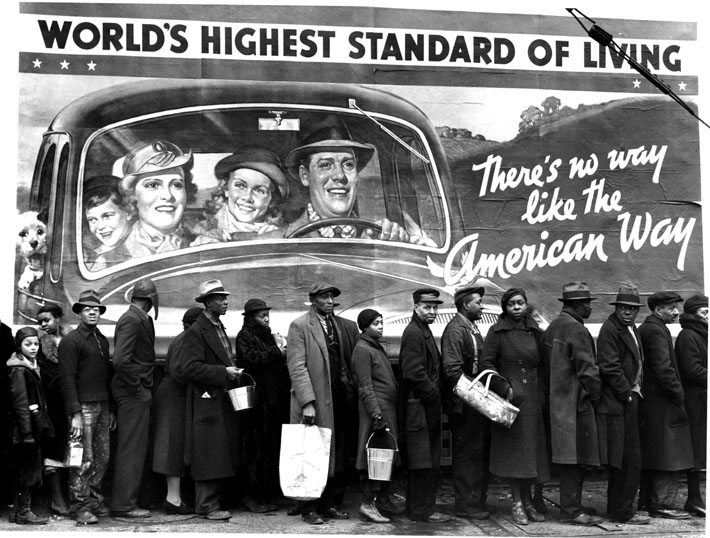
For example, ex-nomination can be seen in how we talk about culture in the U.S.A. This is why we talk about the “American Dream” or “American Values” or the “American Way” and not the “White Dream” or “White Values” or the “White Way.” The latter statements would offend our politically correct sensibilities but would be more accurate because in reality what we are referencing these things we are referencing values and beliefs that used to be primarily if not exclusively located in white-skinned Europeans.

For example, ex-nomination can be seen in the fact that when people encouraged me to “go to college” what they were really encouraging me do was to pursue a specific type of education in a specific type of educational institution to attain a specific kind of lifestyle and function in a specific kind of society…all shaped primarily by the “white”/Western/European power structures and values.

Thoughts?

What do you make of all of this?  Does this make sense to you (my readers)?  Would there be things you would add or question about this?
While I am still critically evaluating a lot of this argument it makes sense of so many tensions I have seen and experienced.  This understanding of “whiteness” will be referenced in some of my subsequent posts on  race related issues.

Posted in Personal Commentary, Race | Tagged , , , , , , , | 9 Comments

Invisible Children and Kony 2012

Not even to think, to learn about history, or to consider valid criticisms?

Several weeks back Kony 2012 hit my news feed.  For the past several weeks I have been thinking about it and a variety of wider issues related to it. Before turning to those wider issues in other posts I want to post my thoughts on Kony 2012.

Invisible Children and Kony 2012: A brief overview…

Invisible Children (IC) http://www.invisiblechildren.com/ is a non-profit based in San Diego that hopes to help the country of Uganda through awareness, advocacy, and development. The primary issue IC is concerned with is Joseph Kony, his rebel group known as the Lord’s Resistance Army (LRA), and their war crimes in Northern Uganda. Kony and the LRA have mutilated children as an intimidation tactic and have abducted young children to use as sex slaves and child soldiers.

IC’s first video (which is available in a six part series on Youtube starting here) was based off of the experiences of their original members of IC quite literally stumbling into this issue as they came face to face with the reality of thousands of young boys who were forced to flee their homes in an effort to escape the LRA. IC’s efforts have produced development projects in Uganda and led to President Obama sending in 100 U.S. military advisors to train the Ugandan army, primarily for the purpose of capturing or killing Kony.

Kony 2012 is IC’s most recent endeavor. It is an awareness campaign that is aimed at making Kony and his crimes famous through viral videos, posters, T-shirts and wristbands to encourage activism, primarily among the youth.  The overall goal is to maintain awareness and interest in capturing Kony, especially among celebrities and policy makers, so the U.S. does not withdraw the advisors and military support it has sent to Uganda.

Here is the central Kony 2012 video:


I would encourage anyone who has not watched it to watch it before continuing with this post.  I am not endorsing it, but it is only fair to IC to watch what they put out instead of forming opinions about it second or third hand.

Reactions to Kony 2012: Idealism, Criticism and Cynicism…

When this video went viral millions of people watched it in record breaking time.  It was also hit by intense criticism from a variety of sources. IC has been accused of not being financially forthright, of financially supporting the Ugandan army (itself guilty of war crimes), of being used (intentionally or unintentionally) as propaganda for establishing U.S. military bases and presence in Africa to exploit its natural resources…

(Sidenote: That last one might sound incredibly paranoid but watch this video…

…and then read a history book. Empires are driven by national self-interest and the natural resources of the African continent have always been appealing and needed by countries that consume resources at unsustainable rates.)

…of over-simplifying the complex situation of Uganda, of presenting activism as easy and encouraging “slacktivism,” of wasting money on “awareness” instead of investing in sustainable development in Uganda, of soaking up finances and attention that would otherwise go to other agencies that are providing direct needs and services to people, of reinforcing the concept that Africans are helpless and need white Westerners to save them, of containing and perpetuating neo-colonial attitudes, of continuing and perpetuating the “white savior complex” and the contemporary incarnation of the concept of “The White Man’s Burden,” etc., etc. ,etc.

The criticism was so intense that IC released a video responding to the criticisms and has defended themselves in a variety of interviews, articles, statements and guest appearances.

Jason Russell, the CEO of IC and narrator of the Kony 2012 film, suffered what was apparently a mental break down and acted wildly inappropriately on the streets of San Diego. This was attributed to the intense criticism of his person and his life’s work. Russell was taken to a mental hospital for observation and was not charged with anything.

Just to be clear…

Before I go any further I would just like to note a few things.  I am not against IC or Jason Russell.  Whatever their motivations or flaws, the people that make up IC know more about Uganda than I do, have helped more Ugandans than I ever will, and I believe they are going about helping people in what they believe is the best way possible. Whatever the fruit of their work or the ideological basis of it, more people are talking about Kony than they were a year ago. I think some of the criticisms of Kony 2012 were unnecessarily personal and some went over the top.  I do not think Russell’s breakdown was fueled by drugs or alcohol but truly was a mental breakdown as the result of intense criticism. I do not think he is a bad person and I’m sure if someone videotaped my worst day and put it on TMZ I would not look so great either. I do think what Kony has done is evil. I would like to see him, and all mass-murderers, experience justice in this life  I would like to see him, and all who use violence as an intimidation tactic, stopped. I do think non-Ugandans can be helpful to Ugandans as they rebuild and repair their society in the wake of colonialism, dictators, and neo-colonialism.

That being said…

Many of the criticisms of Kony 2012 are valid, even some that were delivered in rather merciless ways, and any reasonable person or organization should be willing to admit mistakes, engage with criticism and grow from it, even if it comes from the vicious attack from an enemy.

IC and their defenders cannot dodge these criticisms by labeling their critics as cynics. Just because someone pointed out a glaring issue in your organization does not mean they are “just being cynical” and therefore you can ignore them and the issues they point out.

Likewise, having good intentions are also not an adequate defense for IC and their practices. While it is admirable that IC and their supporters want to help people in Uganda, their good hearts often impair their ability to think through the issue critically.

Teju Cole wrote a brilliant piece for The Atlantic that touched on this issue.  He suggested that the emotional desire to help can impair their ability to “think constellationally.” People see the dire need and they understandably want to help. However, all they can think about is how to resolve the need instead of connecting the dots between the underlying issues behind the need. In this case, the incredibly complex historical issues that have given rise to Kony, the LRA and the incredibly intricate and much larger geo-political concerns at play in Uganda do not appear to have been considered or at least presented in this video.

I previously linked a TED talk by Nolan Watson but I should share it again.

Watson’s message echoes that of Cole’s. Sentimentality and compassion are good things but they can get in the way of working towards substantive long-term change. Acting purely out of sentimentality and compassion can even be counter-productive to doing good.

Simply put, idealism, compassion and sincerity are not overriding virtues that disqualifies all other concerns. Harm, even harm done with the best of intentions, is still harm.

On the next page I will move onto my personal criticisms and thoughts surrounding Kony 2012.

Posted in Personal Commentary, Uncategorized | Tagged , , , , , , , | Leave a comment