Salt flats in Utah I saw as I started a large transition in my life.
About the last several months…
Last Summer I wrote three of what I consider to be the best and most honest pieces I have ever written. (They can be accessed here, here, and here) They were the fruit of a sober reckoning with my past and my present, which had been growing like a crescendo for years.
I wrote those pieces during another episode of depression in which I had very intentionally isolated myself from friends and family, was considering suicide, and even refused to go to the graduation ceremony for my Masters program.
Many things have changed since I wrote those words in that dark place.
I began taking antidepressants and have done well on them. I reconciled with my family. I moved two times. I continued the trajectory that I was already on, which took me further and further out of the orbit of Christianity and the Church which had previously been the center of my life. I started working out at the gym regularly and got in the best shape of my life. I have seen many friends get engaged and married. I worked at a group home for foster care youth for several months. I applied to two PhD programs in Clinical Psychology and was rejected by both.
In the midst of all these big and small changes, perhaps the most important is that I have refocused and solidified what I believe to be the purpose of my life.
In the three pieces I did last summer I provided a quotation from Viktor Frankl, a Holocaust survivor and author of Man’s Search for Meaning, in which he wrote:
What man actually needs is not a tensionless state but rather the striving and struggling for a worthwhile goal, a freely chosen task.
In his book, Dr. Frankl elaborates that what humans need to have meaning in their life is such a task that they fill they, and only they, can work towards with their life. This was born of his experiences in the concentration camps where such scraps of meaning were all that left to motivate men who had lost literally everything else, to continue to struggle to survive.
At the time I had lost sight of the tension I was called to but not even a month later, after driving back down to Pasadena from the trip where I had a major reconciliation with my parents in Modesto, my desire to and my thoughts about working in Native American communities long-term resurfaced strongly after being dormant for some time.
Whatever else happens or changes, whatever I come to believe about God or faith, I know that working to address issues of injustice and inequality in Native American communities makes the most sense of a lot of unique aspects of my life and it is something I have freely chosen to commit myself to.
(Me being me, this also culminated in another long blog post.)
This renewed resolve led me to where I am currently, Grand Forks, North Dakota. Right now I am working in the Seven Generations Center of Excellence at the University of North Dakota as a research assistant working on a grant with our pathology department and the Department of Justice. I am gaining research experience, writing, and learning this year as I prepare to reapply to PhD programs in Clinical Psychology.
Sometimes this move still feels surreal and I have to remind myself that I cannot simply hop into my car and visit friends and family like I have been able to for the last several years. I have only been here a few days and already I have realized that some of my preconceived notions about what life here would be like were wrong, for better and for worse. Regardless, I’m here now, and I’m pretty sure I’m in it for the long haul.
But what of the last three years?
As I enter this new season of life I cannot help but reflect a little bit on the last season of life which was tumultuous to say the least. Words fail me and maybe that is okay because I think a friend who walked with me through those years perhaps said it best.
As I prepared to leave for North Dakota I visited with many friends and one wrote me a very dear letter. In it were the following words:
“I have watched as you confronted your past head on with a tenacity that brought with it moments of reprisal. You did not hesitate to seek truth regardless of what is looked like and for this I am so proud of you. You are courageous Kevin Gonzaga! I know this because I watched as you struggled interpersonally in your relationship with God, romantic hopes, past agonies and an unclear future. But, even in the midst of all that chaos, your willingness to open your heart and home to the Fuller student body made you a catalyst without our community.”
This short paragraph managed to succinctly name the challenges I faced in the last season of life and the responses to them I very intentionally chose. I chose to explore my relationship with God and others, even the parts that scared me. I chose to be vulnerable with my heart romantically, even after being hurt, and being disappointed many times since. I chose to be open and honest about what was going on. I chose to make sure I was creating a welcoming place (in my heart and home) for everyone, especially those who did not fit in anywhere else, regardless of what was going on with me.
These decisions were deliberate and they were not always easy to follow through on. Sometimes I wondered, like I imagine many people do, if these choices I made for myself and the small sacrifices I made for others over the last several years had gone simply unnoticed. My friend’s words reminded me that they were not forgotten or unnoticed which was an unexpected comfort and affirmation as I prepared for another major transition in life.
In fact, unexpected words like these, from this friend and others, are what have buoyed my spirits and kept me moving through some difficult times in this last season of life. May I learn to be equally generous with words of encouragement to others and regard them as a meaningful act in and of themselves with no agenda other than to lift the spirits of those around me.
Our little Twitter exchange (above) left me unable to tease out my point within the confines of Twitter, so I wrote you a short post.
My initial reply was something to the effect of “The same could be said about the last couple of Presidents…” followed by my clarification and example that I, as someone who was anti-war/pro-peace was demonized as unpatriotic under the previous presidency.
My point in bringing this up is that under the current two party system, no matter who we elect, there is someone in office who is most likely pissing off the other half of Americans by pursuing policy they do not agree with. People from opposing parties will characterize their enemies as villains and there will be gloating by those who win.
Welcome to life.
As for my example regarding the Dixie Chicks, my main point was that being anti-war was not popular post 9/11, especially early on. Perhaps even less so than being pro-gun ownership after Sandy Hook. The Dixie Chicks were just one infamous/famous example of people getting hammered for being against the Iraq War. As someone who eventually took a strong stance against the Iraq War (and war in general), Bush’s pursuit of wars was certainly not representative of my wishes, and I knew from the treatment of other and the reaction I received to my own opinions that I was not seen as patriotic, nationalistic, or violent “enough” to be a good American.
Did Bush call me personally and refer to me as un-American? No. But do you suggest that there was no such sentiment at the time circulating around in the Media, on Facebook, in the News, etc. even if alternative viewpoints were also presented?
Does this make sense?
For the record, I think the Constitution has really gone out the window in both of the last two Presidencies and am highly critical of both Obama and Bush. I am for sensible gun legislation and for the private ownership of firearms, even assault weapons and high-capacity magazines.
The tragedy mass shooting at Sandy Hook was not caused by one thing. As soon as the shooting happened everyone (including myself) got on their soap box and focused on one aspect of the tragedy. Everyone pointed to their favorite culprit and suggest what they were focused on was what “caused” the mass shooting.
This is short-sighted and incorrect.
The situation that led to Adam Lanza walking into a school and methodically killing a large group of people, mostly children, was enabled by the intersection of parenting, personal responsibility, a culture of violence in the U.S., gun control, mental illness and many other factors.
However, in light of the predictable arguments regarding gun control this tragedy has sparked, and the Presidents words today and the arguments against his suggestions, I thought it would be a good time to explain why I am a gun owner that is for sensible gun legislation/regulation/control.
But what do I mean by sensible?
There are two extremes when it comes to gun control and both are ridiculous.
One extreme is represented by those who want to abolish or severely restrict firearms. The notion is that tragedies like Sandy Hook and gun crime in general could be avoided or limited by more restrictive gun legislation.
The problem with this stance is that illegal activities are not just stopped by the letter of the law. Law-abiding gun owners would be restricted, loop holes would be found, and criminals would still disobey gun laws. Additionally it should be noted that there are many firearms owners who do not commit crimes. I myself have owned a gun since I was eighteen and my closest run into the law was a speeding ticket while in college. (And that one time I poached in Canada. But we don’t talk about that.) Ultimately this extreme stance does not address the roots of gun-crime. Poverty, a culture of violence and other issues that drive the violent actions guns are used in are not addressed and cannot be addressed by gun legislation (or at least not gun legislation alone).
The other extreme is represented by people who act as if any gun laws are a violation of the 2nd Amendment and one step closer to the U.S. government banning guns and turning into a dictatorial regime. The NRA and other powerful lobbies actively work against any gun legislation. I fear this is done regardless of the actual merit of these laws because this would in some ways restrict the flow of the supply and demand that impacts their bottom line of firearm companies.
The problem with this stance is that I believe any responsible person that is for gun ownership will recognize the incredible lethal potential of modern firearms and that some sort of regulation is probably appropriate to ensure public safety and proper use as best we can. Is it really reasonable that an average law-abiding citizen should be allowed to own and operate a military weapon that can fire hundred of rounds per minute with no check on their criminal background, their mental health or their competency with such firearms?
I believe a middle ground in regards to gun legislation is sensible and desirable. I think we can have our cake and eat it to. Examples of such legislation would be mandatory background checks for all firearms sells and gun licenses, not dissimilar to driving licenses. For example a basic license would allow for the possession, sale and operation of traditional low-capacity long-guns used for hunting, a next level would allow for handguns, and a higher level would allow for assault style weapons. Each license could require more stringent checks and training.
Why I am for such legislation…
I love guns, I am a gun owner and I am totally fine with people owning firearms, including assault weapons. Some pro-gun activists might wonder why I am for gun legislation in general and the ones I have outlined above, which some would find reprehensible. It’s actually simple really.
The fact is many things have changed since the Colonial Era and the drafting of the Constitution and the 2nd Amendment. Two of these changes are the main reason why I am for sensible gun legislation.
First, firearms have advanced to the point where they are far more dangerous than the muskets the average citizen used to use. Modern firearms have incredible destructive potential and are incredibly lethal. In many states firearms, including assault weapons, are in the hands of civilians with little to no training. Assault weapons, high-capacity magazines, anti-material rifles and other powerful weapons are legally owned in a number of states. Their danger does not mean their owners are violent or criminal, but it does mean that there are citizens with access to firearms that are incredibly dangerous.
Second, gun culture in the U.S. has changed dramatically. In the old days firearms were part of the fabric of everyday life for many citizens. People grew up being mentored in their use, their safe handling and a necessary respect for their lethal nature. However, while in some parts of the rural U.S. this culture still exists, generally speaking what people know about guns, the gun-culture we have, comes primarily from the movies, T.V. and video-games where guns never run dry, misfires never happen, children never accidentally shoot themselves and people re-spawn back to life after 15 seconds.
The sum total of this is that people have access to firearms, including incredibly powerful ones, without a pervasive gun culture that ensures proper guidance in regards to their lethal nature and their safe handling.
Ergo, the need for sensible gun legislation…
All thing considered, as a gun owner, and as someone who is completely fine with people owning firearms, I am for sensible gun legislation that avoids the extremes and the errors associated with them.
Now such legislation is not a silver bullet. Criminals will still be able to get guns through clean proxy buyers. Gun crime will still occur as this legislation will not address issues related to poverty, the drug economy, domestic violence, and other issues that contribute to gun crime. Mass shootings will probably still occur. These restrictions will probably at best cut down on some gun crime and accidental shootings. But I should remind people there is no perfect set of gun laws that can categorically prevent events like Sandy Hook from happening. The reason is what happened at Sandy Hook, Aurora, and other mass shootings are multifaceted tragedies that have to do with more than just firearms.
Imperfect as it may be though, I believe such middle ground legislation is in the best interests of our society as a whole both those that choose to own firearms and those that choose not to.
I’ll be attending the Los Angeles rally outside the Canadian consulate again and I invite anyone in the are to join me. The address is 550 South Hope St. and we will be going from noon to 3:00 pm.
Now, as a general rule I never tell other people what to do with their lives, even when friends ask for direct advice. I think the best I can do is help people understand their situation or themselves in a new light.
However, for those of you who are still deciding whether or not to attend a rally tomorrow, I will take this opportunity to remind you of some things I think could help you make a decision.
Colonialism is still alive and well today, even if we hide it better. It is also still against the Gospel and the Way of Jesus. It is sadly also still being supported by many Christians who, for a variety of reasons, still insist on actively or passively supporting colonialism. A current example of this is the colonial actions being taken by the government of Canada, under the leadership of Prime Minister Harper and the Conservative Party.
But what is really going on in Canada and how is it colonial?
What is the Harper’s agenda towards First Nations?
These new policies and legislative measures are ostensibly an attempt to “help” First Nations and reform the current systems through which the First Nations and the rest of Canada interact.
In reality, these are a thinly veiled way for Harper and the Conservative Party to pursue their agenda towards the First Nations. Harper and the Conservative party want to further colonize and exploit the First Nations people for their personal benefit and the benefit of other (Non-First Nations) Canadians. While that is reductionistic, it is accurate.
While fully explaining how these policies are colonial in nature and detrimental to First Nations is beyond the scope of this post, and has been done better by others, I do want to highlight at least three points.
First, the Conservative party’s policies and legislation are encouraging the privatization of reservation land. This change is allegedly being made to encourage entrepreneurial ventures by FN and increase the economic well-being of First Nations reservations. However, private land ownership is a very Western concept tied to the whole capitalistic system. Both are not native to First Nations who hold to a very different relationship to the land. Any move towards privatization of land and the lowering the level of consensus necessary to sell of reservation land is to enable reservation lands to find their way into the hands of non-Natives (eliminating the reservation parcel by parcel) and for the disruption of the use of the land by First Nations.
If you are skeptical on this point please research the Dawes Act and the impact it had for the Lakota. While you are at it, please consider why explicitly colonial legislation from over a century ago bears a strong resemblance to legislation being passed by the supposedly more progressive and benevolent Canadian government.
Second, this privatization goes hand in hand with changes to the Navigable Water Act which will remove federal protection of various waterways. Combined, these will ultimately allow energy and mining companies to operate easier on and through First Nations land with less accountability regarding environmental destruction. For what is easier for a company who wants to extract resources from First Nations land, to deal with a tribal council considering tribal land, or dealing with individual families and persons who are deeply impoverished? Is it easier to work around two layers of protection, federal and provincial, or just one?
Third, the new “results-based approach” to treaty negotiations introduced by the Conservatives will allow the government of Canada to strong-arm First Nations at the treaty table by leveraging the threat of walking away from the negotiations (taking federal funding the First Nations need to survive with them) if the First Nations do not agree to the government’s terms. Both the U.S. and Canada have used the tactic of “Starve or Sign” before when making treaties with First Nations and Native Americans. This is just the most recent example.
In summary, Harper’s agenda is a blatant example of contemporary environmental racism, intentional marginalization of a minority group, and colonialism perpetrated by the government of Canada against the First Nations people. It is an attempt to dismantle the sovereignty of the First Nations, force assimilation, and open up previously protected land to exploitation, pollution, and destruction by Canadian companies.
But what is all this for?
All government deception and self-deception aside, this is all being pursued for the sake of corporate profits, job generation, energy independence and the homogenization of Canada. This is ultimately for the benefit of Harper and the Conservative Party and non-First Nations Canadians.
The energy and jobs will, at least in the short-term, benefit many Canadians who will never step foot on a First Nations reservation or be directly impacted by the environmental destruction. This will also benefit the Conservative government and PM Harper. Some of the corporate profits made will undoubtedly be returned via campaign contributions. Additionally the Conservatives can use job creation and energy independence to help shore up votes in the coming elections.
What’s a Christian to do?
The marginalization, exploitation and attempts at forced assimilation in these new legislation and policies are diametrically opposed to the commandments of God, the manifold calls for justice in the Bible, and the desire for all cultures to come to worship the God of Israel as they are. In light of this reality, the active or passive support of the Harper agenda, including Bill C-45 and other such measures, by Christians is unthinkable.
How does the current generation of Christians want to be judged by history?
Now Stephen Harper himself, many members of the Conservative Party, and many Canadians who voted for his government and support his policies are all Christian.
Some are ill-informed and ignorant in regards to the Gospel, how these policies impact First Nations, colonialism or all of the above. Some are very comfortable enjoying colonial privilege and would rather use a variety of go to stereotypes about FNs. Most I think are just scared. The economy has made the general population of Canada far more scared of keeping their jobs and maintaining their lifestyles than whatever negative impact this legislation might have for Canada in the future or the fact that it violates treaties they are only dimly aware of.
Whatever reasons they might have, Christians need to seriously consider how we want to be remembered by history. Do they want to be remembered like we remember those former Christians who endorsed slavery, colonialism, sexism, racism, and homophobia, or do we want to be remembered as those who worked to end such things? Canadian Christians especially must seriously consider if they will sit on the sidelines, actively support the Harper agenda or stand in solidarity with the First Nations.
In light of the fact that we will be judged by how we treat the least of these (Matt 25) I believe standing in solidarity with the First Nations is the only choice that will not be embarrassing when we give an account to God for actions and inaction.
If the Gospel is anti-colonial, why have Christians been so complicit in colonialism?
I have argued that the Gospel is inherently anti-colonial. Combine that with the non-violence Jesus taught, practiced and expect us to follow (which thoroughly undercuts the main tool colonial empires employ), the repeated calls for Israel to provide justice for the marginalized, the poor, the downtrodden and the weak (which are often those who are victimized by colonial enterprises), it is unthinkable that a follower of Jesus would support colonialism.
However, history is filled with examples of Christians actively supporting and even providing spiritual sanction and backing to colonialism. Perhaps this can be most clearly seen in the Western European colonialism.
The expansion of European powers across the world was not just sanctioned but supported by Christians. It has been a thoroughly Christian enterprise from Columbus to present day. Both Protestant and Catholics were instrumental in driving colonialism forward. For example, Christians provided theological backing to the enslavement of Africans and the theft of land in both Africa and the Americas. This assuaged any sense of guilt or remorse some may have had.
It appears while Jesus would not colonize you, Christians certainly will. How did this come to be?
The Caricature of the Gospel at the foundation of Christianity
The simple reason for this is that the Gospel many Christians follow and many people are familiar with is wrong.
The standard Christian Gospel says that humans are bad and sinners. God condemns all sinners to Hell unless their sins are forgiven. In the old days people made sacrifices to make up for their sins and appease God but then Jesus, the Son of God, came and died once and for all for humanity’s sins. Now if someone prays to accept Jesus as Lord and Savior, then they are forgiven of their sins and after they die they will go to Heaven, to enjoy paradise with God, instead of Hell where everyone else will go to be tortured and endure punishment forever.
While some Christian sects articulate it differently, or are incredibly obsessed with various other aspects of Christian practice or theology, when pressed and distilled, this is the Gospel at the heart of their faith.
Two major problems with this Gospel
While this Gospel is widespread and goes back centuries, there are two major problems with this Gospel.
First, this “Gospel” is not in the Bible.
As I have said previously, one simply does not find Jews looking for a Messiah that would bring individual salvation apart from temple sacrifices. In fact the Bible says very little about Heaven and Hell and the Jewish conception of the afterlife is very different from the one envisioned in this “Gospel.”
The Bible verses that are commonly used to support this Gospel only appear to provide support if one already understands the words in play according to this “Gospel.” In other words, you already have to come in assuming this “Gospel” is true in order for the scriptures to support it.
The widespread historic nature of this “Gospel” is due to the fact that when something grows widely believed, it is rarely examined or criticized. New members follow the herd and those born into the faith know nothing else. Those who question too much quickly find themselves ostracized socially or even officially by the Church.
Second, this “Gospel” is very thin.
This “Gospel” is primarily (only?) about assuring one’s final destination by praying a prayer and/or getting baptized. One’s personal salvation, and the personal salvation of others is to be a Christians primary concern and it is apparently God’s primary concern as well.
This thin focus allows the rest of your life (how you actually live, how you relate to other people, how you relate to the land, how you engage in politics, how you handle money, etc.) to be run according to one of hundreds of competing ideologies in our world. Instead of following the Way of Jesus in these matters or consulting the rest of scriptures which do touch on many of these topics, safely assured of their personal salvation, Christians who believe in this “Gospel” can pretty much do whatever they want. Because this ‘Gospel” is so thin, it is easily co-opted and used for a variety of purposes, including colonial ones.
Historically speaking the result is that this caricature of the Gospel has dominated Christianity for some time, and this in turn has allowed Christianity to be dominated by a variety of interests, including those diametrically opposed to the will of the God of Israel as clearly expressed in scriptures many times.
A Co-opted Gospel Turned Colonial Engine
For centuries this caricature of the Gospel has been spreading and it has been spreading hand in hand with Western European culture. For centuries Christianity and Western culture have been heavily involved with one another and the result is the lines what it means to be a Christian and what it means to be a Western European have been blurred. Christians have assumed many aspects of Western European culture are Christianity.
Practically what this means is that Western European missionaries, to Africa, Asia and the Americas have been spreading not just this caricature of the Gospel but Western European culture as well. Where the Gospel goes, so does Western dress, Western relationships to the land, Western languages, Western ideas of governance, Western ideas of family, etc. In this way those that receive the Gospel also experience their culture being replaced by Western culture, sometimes overtly sometimes covertly. Colonialism came through the Church where it did not come through the State, but usually it came through both.
“The Last Cannibal Supper” by Greg Semu (www.gregsemu.com)
Would Jesus colonize you?
Would Jesus colonize you? Would Jesus force you to convert to another culture, speak another language, adopt different values and change everything about who you are in order to follow Him?
Judging the past actions of Christians, who have spear-headed countless colonial efforts in the last several hundred years alone, the answer they provide is apparently yes. Today, the actions and strategy of many Christian missions organizations and efforts also implicitly contain that same belief.
However, I believe this is incorrect.
To answer this question correctly, the only place to start and finish is to read the whole of scripture with colonialism in mind.
Beginning with the Old Testament one complicating factor arises very quickly: throughout their history the Israelites have both suffered and perpetrated colonialism. They suffered the tools of colonialism at the hand of foreign empires yet also used them themselves when they displaced others, most notably the Canaanites. From the Old Testament alone, labeling colonialism as always against the will of God or always acceptable to God is impossible.
However, from examining the New Testament, especially how Jesus was the Messiah of Israel, and how the Holy Spirit worked in the community of faith from there on out, and the Gospel as a whole the answer to this question is a resounding “No.” Jesus would not colonize you and the Gospel is inherently anti-colonial.
The Anti-Colonial Gospel
If one reads the Bible from cover to cover and other Jewish literature, you will notfind a people hoping for a Messiah that would die for their sins so they could be forgiven and be assured of their spot in Heaven after they die.
What one will find is that the Israelites were looking for the fulfillment of many promises made to them by their God. They wanted to know whowas going to fulfill the promises made to them, howthese promises were going to be fulfilled, and perhaps most importantly, whenthese promises were going to be fulfilled.
But what promises am I talking about here?
Throughout the centuries God had made many promises to the people of Israel. The promise that Israel would enjoy peace with their enemies, that they would be returned to the land, that they would enjoy material/social/spiritual blessing, that after being scattered they would be re-gathered by God and that a Messiah would come that would fulfill these promises are just some examples.
Yet these promises were slow in their coming and this lead to increasing speculation about them. For centuries the people of God were asking when the Messiah would come, who the Messiah would go to, what the people of Israel should be doing in the interim, and how the Messiah would fulfill and initiate the fulfillment of these promises and related questions. Eventually different schools of thought and belief arose and the early Jewish sects (the Pharisees, the Zealots, the Sadducees, the Essenes, etc.) were all essentially divided by how they answered these questions.
So, what is the Gospel?
The good news of the Gospel, the Gospel presented in the Bible, is that the God of Israel was faithful to the promises God made to Abraham, to David, and later to the people of Israel through the prophets. The Messiah did come and these promises were fulfilled and continue to be fulfilled.
The Gospels and the rest of the New Testament contain the stories about how the God of Israel did fulfill and initiate the ongoing fulfillment of these promises in the work, the person and the Way of Jesus Christ, the Messiah of Israel. These stories explain how all people are now welcome to join the re-gathered community of Israel, the community that is a blessing to all nations as it collectively pursues the Way of Jesus. These stories explain that while pain, hardship, death and suffering are still a reality, the future holds the promise of a physical resurrection into everlasting life in a new Heavens and a new Earth where pain, suffering and death will not exist.
So how is this anti-colonial?
To explain how this Gospel is inherently anti-colonial, we need to dig a little deeper and look at four finer points:
First, one of the promises the people of Israel were waiting for was the promise that all nations would come to worship the God of Israel (Zeph 2:11; Psa 22:27; Psa 86:9; Isa 66:23; Rev 7:9; etc.). The promise was not that all nations would become the same nation by adopting one meta-culture, but that all nations would come to worship the God of Israel. The fulfillment of this promise did not lie in the erasure of cultural differences and the homogenization of the community of faith, nor the assimilation of all other cultures into Jewish/Israelite culture but in many different cultures and people coming to worship the God of Israel.
Second, there was the Holy Spirit’s activity at Pentecost. In the second chapter of the book of Acts, a story is recorded where the Holy Spirit descended upon the followers of Jesus after His death and Resurrection. The followers of Jesus began to speak in a variety of languages. The onlookers, who represented a wide swathe of people groups, miraculously understood the disciples in their own native languages. What is incredibly important to note is that the Holy Spirit did not enable everyone to hear or comprehend Greek or Aramaic, the languages the disciples were perhaps most familiar with. The Holy Spirit enabled the onlookers to hear the message in their own native languages. This dis-empowered the disciples of Jesus who really did not understand what was going on. It also signaled the Holy Spirit’s intent that no one culture or language would come to dominate the community of faith gathered around Jesus. Theologian Justo González perhaps articulates this best when he said, “Pentecost is the Holy Spirit’s rejection of any attempt to make one particular language, culture, or way of doing things dominant in the Church.” In other words there is no culture that is the one and only Christian culture that every follower of Jesus needs to adhere to. People can accept the Gospel and accept Jesus without accepting the culture that brings them into contact with the Gospel and Jesus.
Third, in Acts 10 the Holy Spirit added Gentiles (people were not ethnically/culturally Jewish) to the family of God. Unlike previous Gentile converts to Judaism, these people had not assimilated into the Jewish culture and religion. Most notably they were not circumcised. Circumcision was an important ritual that had previously acted as a boundary between the people who followed the God of Israel and everyone else. If a non-Jew wanted to become Jewish and a worship of the God of Israel, they converted and assimilated into the religion and people. This process included males going through circumcision. Yet these Gentiles in Acts 10 became worshipers of the God of Israel without going through the standard process that was normally required by the community of faith. Furthermore, this was done directly by the God of Israel. The conclusion of the disciples was that God was doing a new thing and God should probably not to be disagreed with. Gentiles did not have to become Jewish to follow Jesus and in fact, God wanted them to remain very much Gentiles. New believers were to follow the Way of Jesus from within their own context and culture. Israel had been symbolically and truly re-gathered around Jesus and it was also re-defined. Now Israel went far beyond the ethnic and cultural boundaries it had been synonymous with for centuries and included people from a variety of people groups.
Fourth, this understandably led to one of the primary tensions seen in the New Testament: the challenge of having one community of faith with many cultures. Some of the Jews still believed, contrary to the work of the Holy Spirit, that the Gentiles needed to assimilate into Jewish culture to be part of Israel. This was rejected but having many cultures in one community of faith was a continued source of conflict. Examples would include the rebuke Paul gave to Peter for not eating with Gentiles (Gal 2), and the dispute over how the Greek followers of Jesus felt their widows were being overlooked in favor of Jewish ones (Acts 6). This source of tension was so great that the only rule the apostle Paul laid down for all the churches he planted was this: “each person should live as a believer in whatever situation the Lord has assigned to them, just as God has called them.” (1 Cor 7:17) In the surrounding context Paul directly applies this commandment in regards to social status as well as religious and cultural distinctive markers. Paul is saying that people should remain and maintain in the context and culture God has placed them in and they do not need to change in order to be part of Israel and worship the God of Israel.
In short, the Gospel is about the realization of promises made to the people of God. One of the promises made, one of the promises Israel was hoping would be fulfilled, was that a diverse plethora of nations would come to know the God of Israel as the one true God. Therefore, any attempt to eradicate a culture or colonize another group of people, thus eliminating their culture, goes directly against this promise. The Gospel is not about conforming all people to one “biblical” culture (whatever that is imagined to be), but about introducing all cultures, nations and peoples to the God of Israel and welcoming those who fall in love with Messiah Jesus into to the family of God as they are.
From all of this the only answer to the question at the heart of this post is that Jesus would not colonize you.
A few weeks ago, I went with Wii-Kendimiing Nishnaabemowin Saswaansing, a group of Nishnaabeg families committed to language learning, culture and the arts to do a Feast of the Dead ceremony at the Serpent Mounds, on the north shore of Rice Lake. Hiawatha First Nation acts as the caretaker of this sacred place, and because the area has been closed for renovations for a number of years, I asked my fellow Mississauga Anishinaabeg for permission to hold the ceremony on our lands. They were happy to have us.
On the morning of the ceremony, we drove our cars to the site. I pulled off the highway into a small gravel parking lot outside of the locked gates. I was immediately met by an angry white man who bounded towards my carload of children, banged on the window and aggressively demanded I move my car. I agreed and…
Idle No More is an movement among First Nations in Canada that has sparked support by Native Americans in the U.S. and indigenous persons all over the world.
The Idle No More manifesto is as follows:
We contend that:
The Treaties are nation to nation agreements between First Nations and the Crown who are sovereign nations. The Treaties are agreements that cannot be altered or broken by one side of the two Nations. The spirit and intent of the Treaty agreements meant that First Nations peoples would share the land, but retain their inherent rights to lands and resources. Instead, First Nations have experienced a history of colonization which has resulted in outstanding land claims, lack of resources and unequal funding for services such as education and housing. We contend that:
Canada has become one of the wealthiest countries in the world by using the land and resources. Canadian mining, logging, oil and fishing companies are the most powerful in the world due to land and resources. Some of the poorest First Nations communities (such as Attawapiskat) have mines or other developments on their land but do not get a share o…
f the profit. The taking of resources has left many lands and waters poisoned – the animals and plants are dying in many areas in Canada. We cannot live without the land and water. We have laws older than this colonial government about how to live with the land.
We contend that:
Currently, this government is trying to pass many laws so that reserve lands can also be bought and sold by big companies to get profit from resources. They are promising to share this time…Why would these promises be different from past promises? We will be left with nothing but poisoned water, land and air. This is an attempt to take away sovereignty and the inherent right to land and resources from First Nations peoples.
We contend that:
There are many examples of other countries moving towards sustainability, and we must demand sustainable development as well. We believe in healthy, just, equitable and sustainable communities and have a vision and plan of how to build them.
Please join us in creating this vision. (Source: http://idlenomore1.blogspot.com/p/manifesto.html)
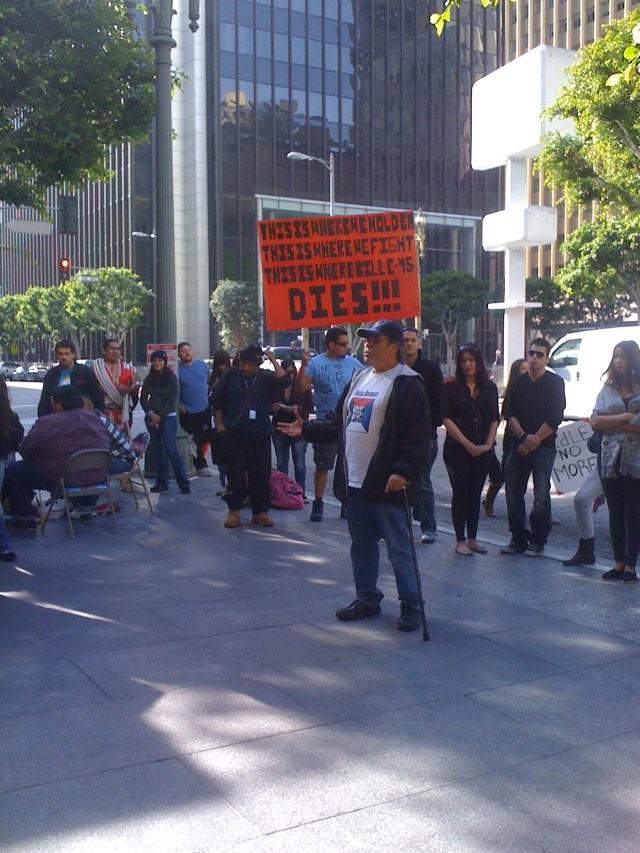
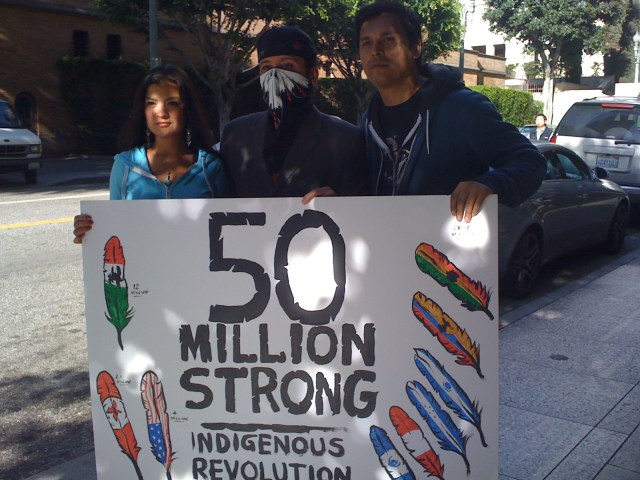
A solidarity rally was organized down here in Los Angeles. I went and met up with some great people. Here are some photos I took.
I made my very own first protest sign!
This morning was like Christmas morning. I was really eager and it felt like my first day of school! Let it be known that @speakfaithfully is now hitting the concrete and not just the Facebook walls or Tweets to spread the word.
There were about 30 or so other protesters.
There were also some speakers…
…they spoke on a variety of topics. This man spoke on the need for indigenous sovereignty worldwide.
Adam Beach was there.
And so was @andrealandry1. This is her giving an impassioned, articulate and intelligent speech.
@NativeApprops was there too. She got to interview a lot of cool people and I look forward to her blog post on this event.
There was a lot of dancing. I round-danced and this man performed a hoop dance for our healing. It was amazing. This picture does not do it justice.
There were also some amazing signs and talented people supporting the rally.
And overall we had a great day and then went home.
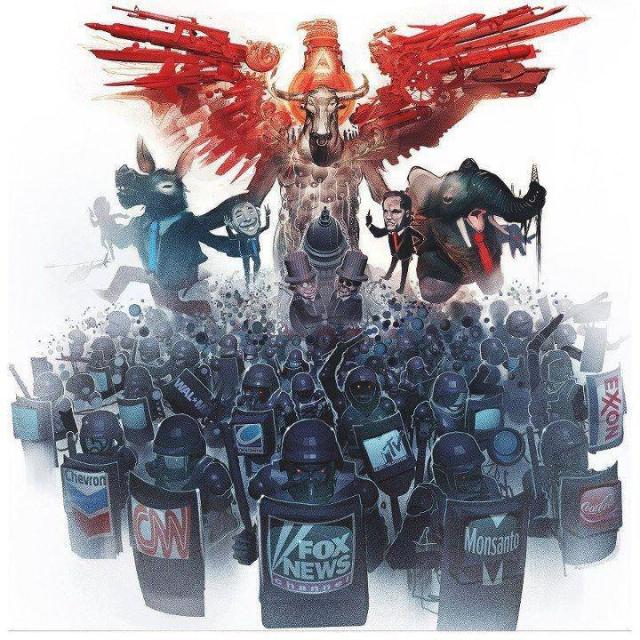
The U.S.A. has completely lost its way as a nation. Rhetoric and money control our social conscious and our domestic and foreign policy. This has led us into a place where we are a very pathetic example of a democratic nation. We are, in my opinion, not really a democracy but an invisible aristocracy. We are a nation ruled by moneyed interests, most of whom are unknown to the U.S. public in general.
Tabling questions surrounding the legitimacy of our entire nation that was built on and is sustained by the threat of force, and avoiding a deeper discussion of how things got the way, I want to just cut to what I think we can do to help our nation as it is. I think if we want to reaffirm our desire to be a model pluralistic democracy we need to make a number of changes to reorient our nation in that direction.
The following suggestions are things I think just about every U.S. citizens could get behind if we stopped, set down the party loyalties, turned off the talking heads on T.V., and thought about what was truly best for our nation and the world. For the most part these are in no specific order, except for the last three which I believe are the most fundamental and important.
Reform the Criminal Justice System
How different is this from the slavery block really?
Currently the U.S.A. incarcerates it citizens at a rate five times higher than any other industrialized nation. We have 5% of the world’s population and 25% of the world’s jail population.
This system is inherently racist. Ethnic minorities and those from poor neighborhoods are far more likely to end up trapped in our jail economy than whites and those from richer neighborhoods. They face higher conviction rates and tougher sentences for no real reason other than systemic racial bias in our society. Keeping people in jail or on probation destroys families and only perpetuates the cycle of poverty, crime, and jail-time. As such, the justice/prison system in the U.S. functions as a form of legally sanctioned Jim Crow laws and socially approved lynching.
While I believe various laws can be reformed and changed I believe the primary thing we need to do is to move from a punitive justice model to a restorative community based model.
In the punitive model, the thought is criminals should be punished for their crime and this punishment will act as a warning to other criminals who are considering doing harm. This does not work out to well. The recidivism rate (the rate of people who commit a crime, go free and then go on to commit more crime) is incredibly high. Something like 75%+.
Punitive justice does not work, and the experience of jail is not a deterrent. Either people are simply too evil to care, they are committing crimes for reasons that punishment does not change, or they are being incarcerated in our dubious legal system for a variety of reasons.
Restorative community based justice focuses on involving the community, reforming the individual and ultimately restoring the individual to society, not as an ex-con but as a rehabilitated peer. Our justice system did start out with this aim. Jails in the U.S. were originally places where people would reflect upon and be penitent about their crimes before returning to their society. That is why some jails are still called penitentiaries. We lost this focus a long time ago and settled for an industrialized and de-personalized jail system. While efficient, it is broken.
While reform and restoration might not be possible with every criminal, such as true sociopaths or serial killers, I believe the majority of people, especially youths, in the criminal justice system could be restored to their communities and we would have less crime, less tax burdens and a healthier society as a whole.
Invest in Post-Secondary Education
The next generation that should be driving the economy will just be driving the profits of banks.
I think we should work towards subsidizing education beyond high school. This would mean the government footing the bill for U.S. citizens pursuing education at colleges, career, technical or trade schools. Many countries, such as Canada, subsidize secondary education. This leads to a better educated, more debt free and capable work force. For-profit education and student loans are killing my generation and many are not buying homes, starting families, and making purchases (aka, driving the economy) because of these issues which is only adding to economic stagnation.
While this system is being implemented I believe we should also help those who have student loan debt by freezing interests, buying and cancelling debt (like the OWS movement is doing) and otherwise attempting to tone down the for profit education industry and loan industry.
Establish a Universal/Dual Healthcare System
Look at us being behind the curve…
I think we should pursue a dual healthcare system, similar to Australia’s healthcare system. What this means is that I believe the U.S. should provide healthcare for all of its citizens through taxes. I also believe private healthcare should be allowed to continue to exists. This would provide a baseline safety net for all of our citizens but not exclude companies using private health care insurance as an added incentive for attracting top candidates nor would it prevent individuals with the means to do so to buy their preferred healthcare.
Some might say that the government is bad at providing healthcare and therefore it should not be done. They cry, “Just look at the VA system! Clearly the U.S. cannot be trusted to run hospitals.”Ron Paul uses this argument.
This is bullshit.
Where is our can-do American optimism? Are we suggesting that other countries can pull this off but we cannot? Are we suggesting because something is wrong or broken it can never be fixed? This is just rhetoric.
If the U.S. has a bad track record of providing health insurance for our veterans the solution is not to make sure that the U.S. government never gets involved in healthcare, but making sure the right heads roll, the right heads replace them, and the right solutions are implemented. Call me an idealist but I think we are up to the challenge.
I realize there is no perfect healthcare system, but I think this would be the best one, and a similar system is already in place in other countries.
Change the focus of our economy from consumption to sustainability
Our economy and society is capitalistic in nature. That means it is fundamentally based on buying and consuming things we do not need. This represents a culture of waste and exploitation with nothing more than a token respect for the land that we are dependent upon. This is why half of all the food in the U.S. is wasted and we burn through resources more than any other country in the world. As the Western way of life is exported around the world and more countries adopt our practices and our waste, this situation is becoming increasingly dire.
This type of economy and society is sending us not just towards a financial cliff but an environmental cliff.
Because we cannot bail ourselves out of a famine or eat money, the sensible thing to do is to move towards a sustainable economy and learn to live within our means.
This means investing in green/renewable energy. Now is the time to invest and rapidly develop these types of energy. We should not wait until the oil runs out or there are no more mountains to level.
This means reorganizing our society and the way things are done. Everything from family size to how we get our food is impacted by our use of energy.
This means being willing to rethink the assumption that the only way for the U.S.A. to exist is to be devoted to free-market capitalism.
This means a lot of growing pains. We can be mature, accept them now, and absorb these changes or we can have them forced upon us when there are massive food and energy shortages. I fear we may all have to learn the hard way the truth of this old Cree prophecy…
Legislative and Electoral Reform
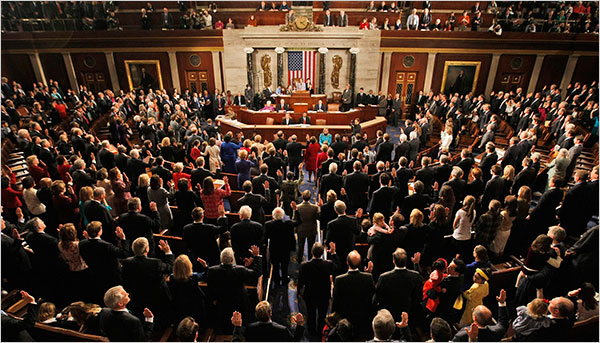
Can these people do something beneficial for a change?
There are a number of legislative and electoral reforms I believe we should make happen yesterday.
We should eliminate the electoral college system. The vote of every U.S. citizen should count equally when deciding the next federal leader.
We should end the ability for politicians to add unrelated amendments/additions to bills. This slows down the process of bill approval, enables pork-barrel spending, and muddies the issues on otherwise clear reforms that could and should take place.
We should also make corporate lobbying and Super-PAC’s illegal. This is a form of legalized bribery. When the person with the most money to buy up ad time wins, and the vast majority of money comes from individual donors or Super-PACs, we are allowing a select few to essentially chose our president and elected officials while we pretend we are in control. Incumbent politicians, concerned with re-election, have to raise $20,000 a day to get re-elected. They have to devote their time to fundraising and not to reading legislation and interacting with the people they were supposedly elected to represent.
When this is a reality, democracy does not exist.
Lobbying, Super-PACs, and other way money gets into politics is the basic mechanism that has enabled our democracy to morph into a sham democracy that is truly an invisible aristocracy. We should put a stop to this.
Sensible Regulations on Corporations
This is way more true than any of us really want to admit…
While market competition and entrepreneurial endeavors in our economy we need to develop sensible legislation to deal with mega-corporations. I am not talking about dealing with the local family owned grocer, I am talking about the mega-corporations that own our politicians.
Again, in this situation, a true democracy cannot exist.
One example of sensible reform would be to deal with our tax policy regarding corporations. As a recent documentary has presented, the taxation policy governing large corporations is influenced by the income defense industry, an industry of lawyers and bureaucrats that are in the employ of large corporations to protect the corporation from taxes. It is the exploitation of our tax system and our legislative policy that has allowed for companies, like GM, to pay no taxes to the government. We should probably close these loopholes, and take measure to prevent this from happening.
Another example of sensible reform would be to audit our subsidies. The government currently subsidies a number of large industries, often to the detriment of the U.S. public as a whole, that do not need it.
Healthier food costs far more than unhealthy food.
We need to rethink and reform these subsidies that are undercutting our free-market, hurting public health, contributing to global poverty and feeding mega-corporations.
End the American Empire and Decrease our Reliance upon the Military-Industrial Complex
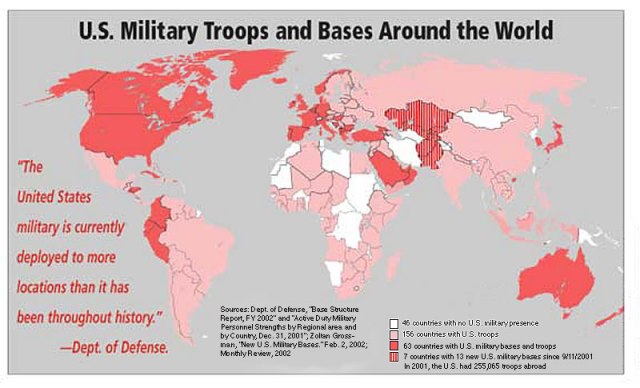
The U.S.A. is a military empire. Some might disagree with this and suggest that we do not invade other countries to take their land, so we are not an empire. Let me respond to this objection to make my point clear.
First, we stole these lands from Native Americans through violence or buying the land from people who had done it for us. Second, we have military bases in a variety of countries. What foreign country has military bases on U.S. soil? Third, we use the threat of the projection of our force and our gigantic military to get our way in the world. This sounds a lot like a military empire to me. Just because we currently are not taking new land, or use intermediaries like paramilitary groups, private military companies and terrorists, does not mean we are not using violence to get our way.
We have, like all empires, become too accustomed to this and it will ultimately destroy us or the world. Unless we change, this destruction will most likely occur due to a global conflict over the dwindling resources of this planet. It will probably be fighting with either Russia or China over what remains of the resources in Africa.
In his exit speech, Dwight D. Eisenhower warned against the military-industrial complex saying this:
Before WWII the U.S. had pursued a policy of essentially conscription when military arms and personal were needed. After WWII, for a variety of reasons, a standing military and arms industry were pursued. This changed the political, economic, (and according to Eisenhower) spiritual landscape of America.
In his speech, 51 years ago, Eisenhower predicted what was going to go wrong with the U.S.A over the next several decades.
Since WWII the U.S. has increasingly become reliant upon our “Defense” industry. The use of military force, or the explicit or implicit threat of force, has been used to get what we want on the global stage. Additionally, at home we have become increasingly reliant upon it to create jobs and move money from the government to the private sector. The military, the arms industry and associated industries, such as private military companies and support contractors, are in a very lucrative business.
This over-reliance is perhaps most acutely evidenced by the unprovoked invasion of Iraq. In Desert Storm we came to the rescue of Kuwait and fought Iraq with a U.N. mandate, saying it was not okay to just invade another country.
Several years later we unilaterally invaded Iraq without the approval of the U.N. or any serious provocation or cause from Iraq.
We just invaded because we could and we knew no one could stop us.
We have become drunk on our power and mixed with WWII nostalgia we still think of ourselves as the world’s perpetually justified policeman.
This status quo has made cutting our ridiculous defense budget impractical and unpopular. Opponents of this sensible option suggest to cut our defense spending would mean cutting jobs, rethinking foreign policy, appearing “weak” to our enemies, and adjusting many facets of our social and global behavior.
I would agree, but I think this would be a good thing.
History
“A nation that does not know its own history has no future.”
– Russel Means
This is the most important change I think we need to make.
The United States is a country without a strong storied common culture that reaches back centuries around which we can unite and galvanize our citizens. We are a country of immigrants that has primarily been run along Western European values. Some historians have argued that land and opportunity have taken the place of a common shared history as the center of our culture. In place of a shared history, our orientation towards the Future, Manifest Destiny, the Frontier and the American Dream has united U.S. citizens and pushed our culture forward. As a result we are a present and future oriented country. This makes sense as we have little shared history to focus on even if we wanted to.
While this is good for our nation in some ways, it also cripples us. We routinely repeat our own mistakes and are short-sighted when it comes to just about everything. If we took a sober and critical look at our history, even over the last fifty years, we would see that many of our problems have been faced before by this nation and many of our present solutions will most likely just pass the buck onto the next generation.
A prime example of this is in our foreign policy. We routinely create the enemies future generations of U.S. citizens have to fight. In Overthrow, Kinzer highlights how our dirty dealings in Cuba directly led to the rise of Communism in Cuba, which ultimately led to the Cuban missile crisis and the near destruction of the world in nuclear Armageddon. Again this whole situation was sparked by an impulse to protect American financial and business interests in Cuba.
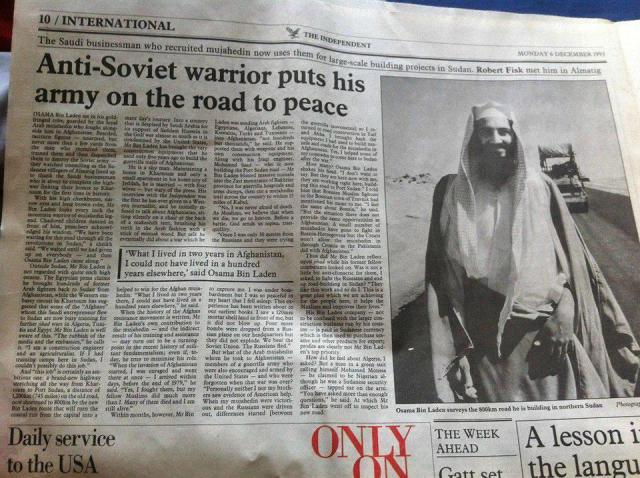
Another more recent example would be Osama Bin Laden and others.
We supported and used Osama Bin Laden and many others as a proxy to fight the Soviet Union and advance American interests abroad. While perhaps sensible at the time, this led to highly problematic unintended consequences. We have helped create so many monsters that we have lost control of, one would think that we would make better decisions…but our focus on immediacy, on sound-bites, on the present cripples us from seeing the clear patterns we need to clue into.





















 Speakfaithfully

The last several months and the last several years…
Salt flats in Utah I saw as I started a large transition in my life.
About the last several months…
Last Summer I wrote three of what I consider to be the best and most honest pieces I have ever written. (They can be accessed here, here, and here) They were the fruit of a sober reckoning with my past and my present, which had been growing like a crescendo for years.
I wrote those pieces during another episode of depression in which I had very intentionally isolated myself from friends and family, was considering suicide, and even refused to go to the graduation ceremony for my Masters program.
Many things have changed since I wrote those words in that dark place.
I began taking antidepressants and have done well on them. I reconciled with my family. I moved two times. I continued the trajectory that I was already on, which took me further and further out of the orbit of Christianity and the Church which had previously been the center of my life. I started working out at the gym regularly and got in the best shape of my life. I have seen many friends get engaged and married. I worked at a group home for foster care youth for several months. I applied to two PhD programs in Clinical Psychology and was rejected by both.
In the midst of all these big and small changes, perhaps the most important is that I have refocused and solidified what I believe to be the purpose of my life.
In the three pieces I did last summer I provided a quotation from Viktor Frankl, a Holocaust survivor and author of Man’s Search for Meaning, in which he wrote:
In his book, Dr. Frankl elaborates that what humans need to have meaning in their life is such a task that they fill they, and only they, can work towards with their life. This was born of his experiences in the concentration camps where such scraps of meaning were all that left to motivate men who had lost literally everything else, to continue to struggle to survive.
At the time I had lost sight of the tension I was called to but not even a month later, after driving back down to Pasadena from the trip where I had a major reconciliation with my parents in Modesto, my desire to and my thoughts about working in Native American communities long-term resurfaced strongly after being dormant for some time.
Whatever else happens or changes, whatever I come to believe about God or faith, I know that working to address issues of injustice and inequality in Native American communities makes the most sense of a lot of unique aspects of my life and it is something I have freely chosen to commit myself to.
(Me being me, this also culminated in another long blog post.)
This renewed resolve led me to where I am currently, Grand Forks, North Dakota. Right now I am working in the Seven Generations Center of Excellence at the University of North Dakota as a research assistant working on a grant with our pathology department and the Department of Justice. I am gaining research experience, writing, and learning this year as I prepare to reapply to PhD programs in Clinical Psychology.
Sometimes this move still feels surreal and I have to remind myself that I cannot simply hop into my car and visit friends and family like I have been able to for the last several years. I have only been here a few days and already I have realized that some of my preconceived notions about what life here would be like were wrong, for better and for worse. Regardless, I’m here now, and I’m pretty sure I’m in it for the long haul.
But what of the last three years?
As I enter this new season of life I cannot help but reflect a little bit on the last season of life which was tumultuous to say the least. Words fail me and maybe that is okay because I think a friend who walked with me through those years perhaps said it best.
As I prepared to leave for North Dakota I visited with many friends and one wrote me a very dear letter. In it were the following words:
This short paragraph managed to succinctly name the challenges I faced in the last season of life and the responses to them I very intentionally chose. I chose to explore my relationship with God and others, even the parts that scared me. I chose to be vulnerable with my heart romantically, even after being hurt, and being disappointed many times since. I chose to be open and honest about what was going on. I chose to make sure I was creating a welcoming place (in my heart and home) for everyone, especially those who did not fit in anywhere else, regardless of what was going on with me.
These decisions were deliberate and they were not always easy to follow through on. Sometimes I wondered, like I imagine many people do, if these choices I made for myself and the small sacrifices I made for others over the last several years had gone simply unnoticed. My friend’s words reminded me that they were not forgotten or unnoticed which was an unexpected comfort and affirmation as I prepared for another major transition in life.
In fact, unexpected words like these, from this friend and others, are what have buoyed my spirits and kept me moving through some difficult times in this last season of life. May I learn to be equally generous with words of encouragement to others and regard them as a meaningful act in and of themselves with no agenda other than to lift the spirits of those around me.